Thanks for taking the time to chat.
As co-owner of the 400 Rabbits bar in Nottingham and Casa Agave, it’s safe to say you’ve got plenty of knowledge on mezcal to share and it’d be great to start off with your first experience with the spirit and how your perception has changed over time.
When I first moved to the UK in my early twenties my experience of tequila was very much the same as most peoples at the time and in the shape of late night cheap shots.
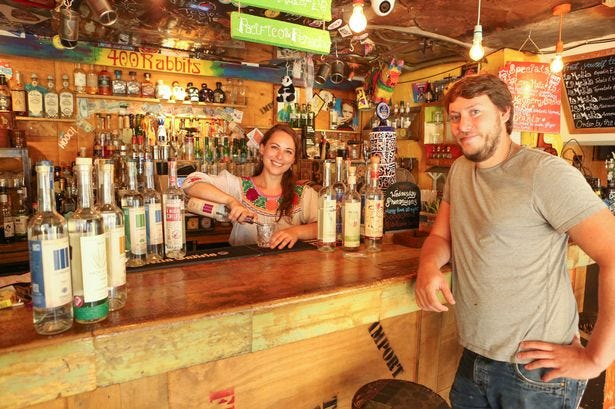
After trying some sipping tequila that was recommended to me, I immediately fell in love with the incredible diversity of agave spirits and started a journey of discovery, opening up a whole world of history and traditions and began working at 400 Rabbits in Nottingham.
My passion for the spirit allowed me to progress in the business to the extent that running the bar was not enough anymore. I needed to show everyone why agave spirits are so amazing and why we should all be enjoying them and so I launched Casa Agave.
Another hugely important thing for me is the fact that it is such an honest and humble spirit. There is nothing quite like tasting something which was created through generations of ancestral knowledge. The humble background of the families and their distilleries is admirable and I want to do whatever I can to support them.
What is it about mezcal that stands out to you from other spirits?
Agave spirits are much like wine as the terroir has such an impact on flavour, this to me is a huge reason it stands out so much in comparison to other spirits.
Each expression can be different, even if it is produced by the same master distiller, using the same techniques and the same agave species. With each passing year, even slight changes to the environment will have an impact on the complexity of the spirit to a far greater extent than with other spirits.
However, it goes so much further than just the remarkable flavours. There are so many aspects to mezcal which are sometimes forgotten about, starting with how the spirit is produced.
The back breaking work that goes in to producing an artisan or ancestral agave spirit is unlike that of others around the world. Not only does the physical work stand out to me in how this spirit is different but also the care that goes in to producing each bottle.
To me one of the most fascinating comments made by a mezcalero we work with about the care he gives his wild agaves, was how he would regularly use a damp cloth to clean each one by hand.
Plants taking a minimum of 8 years to reach maturity, with wild agaves from other sub species taking more than 20 years. It’s mind boggling that a mezcalero has so much dedication to looking after these agaves.
When you start to look at the time it takes and the amount of work that goes in to producing a single bottle then you begin to appreciate the value in a new way.
There are so many great stories about the folklore and traditions of mezcal. What are some stories that stand out to you?
My favourite story is definitely about Mayahuel, the goddess of the agave and mother of the Centzon Tōtōchtin, also known as the 400 Rabbits. You can guess where I first heard this story!
According to Aztec mythology, the earth god Quezalcoatl went to war with the evil Tzintzimitl who took all sunlight away from the earth to slowly destroy it. On his quest he fell in love with Mayahuel, the goddess of fertility.
Together they fled, married, and gave birth to the Centzon Tōtōchtin who according to legend inhabit you when you drink agave spirits. Sadly, Mayahuel was struck down and killed after transforming into a tree to hide.
The victorious Queztalcoatl who in his rage destroyed Tzintzimitl, was left to grieve his Mayahuel. His tears dropped where he laid her to rest and out of the ground grew the first agave and with that the rebirth of Mayahuel as the goddess of agave.
When you and your partner were creating the concepts for both 400 Rabbits and Casa Agave, what were the stories you wanted to tell and how did that impact the overall brand looks?
With Casa Agave I hope to reach lots of people through tastings and events and showcase agave spirits to those who may not have had much experience with it. I love converting people who think they don’t enjoy tequila, to becoming big fans!
When I asked James, who started 400 Rabbits, how he came up with the concept he says it stems from his love of mezcal and Mexican culture which he in part discovered from attending a tasting which kickstarted his journey.
This shows how important it is to communicate and share your love of something as James may never have launched his Tequileria/Mezcaleria without having attending that tasting.
What are some entry level mezcals or tequilas you’d recommend for people?
Most of the time people already know tequila, (or think they do) and have not had the best experience if it has always come in the form of shots. What I like to do is start someone off with an aged tequila (Anejos for whiskey drinkers and reposados for rum drinkers) as these categories of tequila share those familiar flavours that people enjoy, such as dry fruit, raisins, oak, char, vanilla, butterscotch, caramel etc.
When they have enjoyed sipping on a glass of aged tequila I’ll introduce a blanco to the mix. Usually in tastings the order is the opposite way around blanco-anejo.
For this I highly recommend Mexican owned 30-30 tequila. The distillery itself is very eco conscious and runs off the waste material produced by making their tequila, which is entirely without additives and 100% agave.
There are loads of other great tequilas available in the UK ranging from entry level to top shelf. Some of my current favourites are Don Fulano, ArteNOM, Tapatio and Cascahuin.
To get in to mezcal I highly recommend starting with an espadin, as this is the most commonly used agave species and will ease you in to tasting more variety.
The flavours can still be exciting and different from one expression to the next but probably won’t throw you in the deep end of funky flavours as much as other varietals.
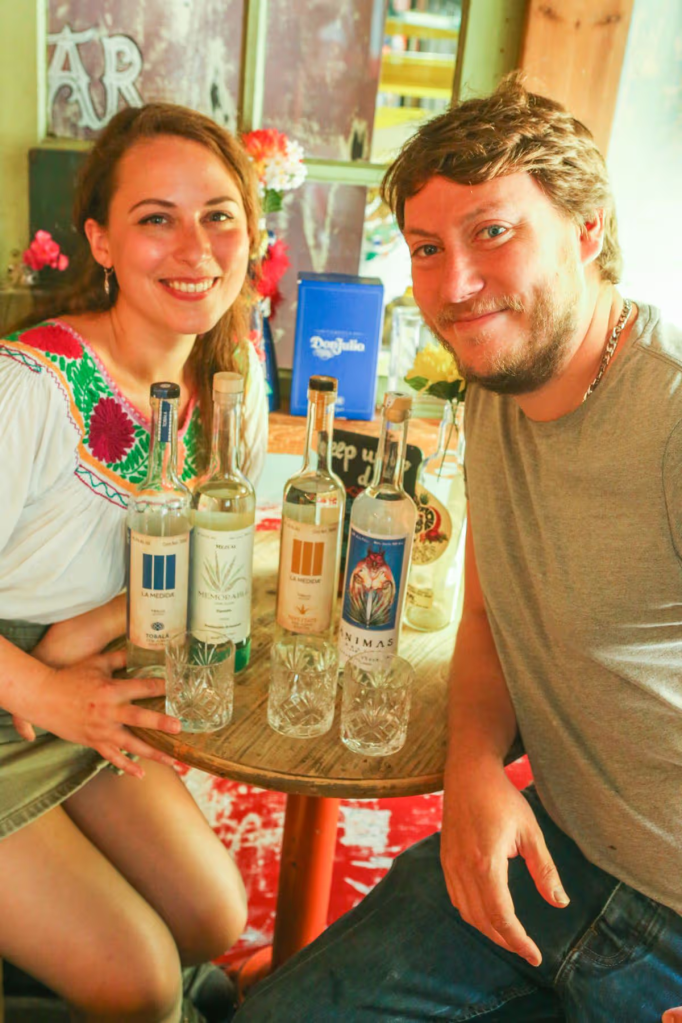
My favourite to introduce to people is La Medida Espadin, as their single variety range offers the best stepping stones in to exploring the different flavours each agave varietal has to give.
They are also great value and can lead you on to trying some spectacular ancestral mezcal Real Minero or other top mezcal such as Derrumbes and Neta. Dangerous Don are also great because they triple distil with some lush flavours, so fabulous for getting in to mezcal.
You’re certified with the Cosejo Regulador del Tequila (CRT). What was the process like with earning that certification?
That was a great few days! Some of the UK’s biggest agave fanatics were invited to take part in becoming certified by the CRT and it involved an intense course to prepare for an exam at the end.
This covered pretty much everything you would need to know about tequila production, its history and cultural importance. I realised then how much more enthusiasm I have for tequila than any of my old school subjects by writing essays in the test that weren’t needed (it was mainly multiple choice haha!)
What tips would you give you bartenders who’re looking to promote mezcal to new drinkers?
The best way in my opinion is through cocktails and talking to people. What I’ve seen over the years is that customers immediately skip a cocktail that lists tequila on the ingredients of a drink if they haven’t been converted yet.
The trick is to find out their preferred flavours/classic cocktails and suggest one that uses tequila as a base. Tequila is perhaps the most versatile spirit out there, other than vodka, as its flavours are very delicate and so it lends itself perfectly to cocktail experimentation.
I would even go so far as saying you could switch out any base spirit in a classic cocktail and play around with agave spirits as a replacement. May that be an Old Fashioned using an aged tequila, a Martini, Mai Tai, Mojito or a Negroni using a Blanco or even a mezcal.
If you could change one thing about the mezcal industry, what would it be and why?
The rise of celebrity owned brands and those who are looking to hop on the tequila/mezcal bandwagon to make a quick buck, fuels the drive of a cheaper, more accessible product for the consumer.
This, in turn, takes its toll on those who produce the spirits, the agaves themselves and the land where they grow, their wildlife and pollinators. Overharvesting of espadin agaves has actually meant that the species is producing less and less healthy seeds naturally.
It’s so important that we as consumers can respect the work gone into the spirits, or anything, which we purchase and try to focus on the brands that are more sustainable, eco conscious, or owned by Mexican families to directly support them.
It’s a fine balancing act to both be a promoter of these wonderful spirits and do it in a way that is sustainable.
How do you see the mezcal industry evolving in the next ten years?
The growth of the agave spirits category is not a trend and it is here to stay and will keep growing.
I hope that as it grows more people will become more passionate about supporting brands and producers who are sustainable in growing their agaves and in their production methods.
With each passing year I notice more people asking about where something is from or how it is made, and with that they will pass on that knowledge and continue a steady, natural and healthy growth of great products.
As Tomas Estes once said: We are all ambassadors.
 The Agaveist
Leave a comment