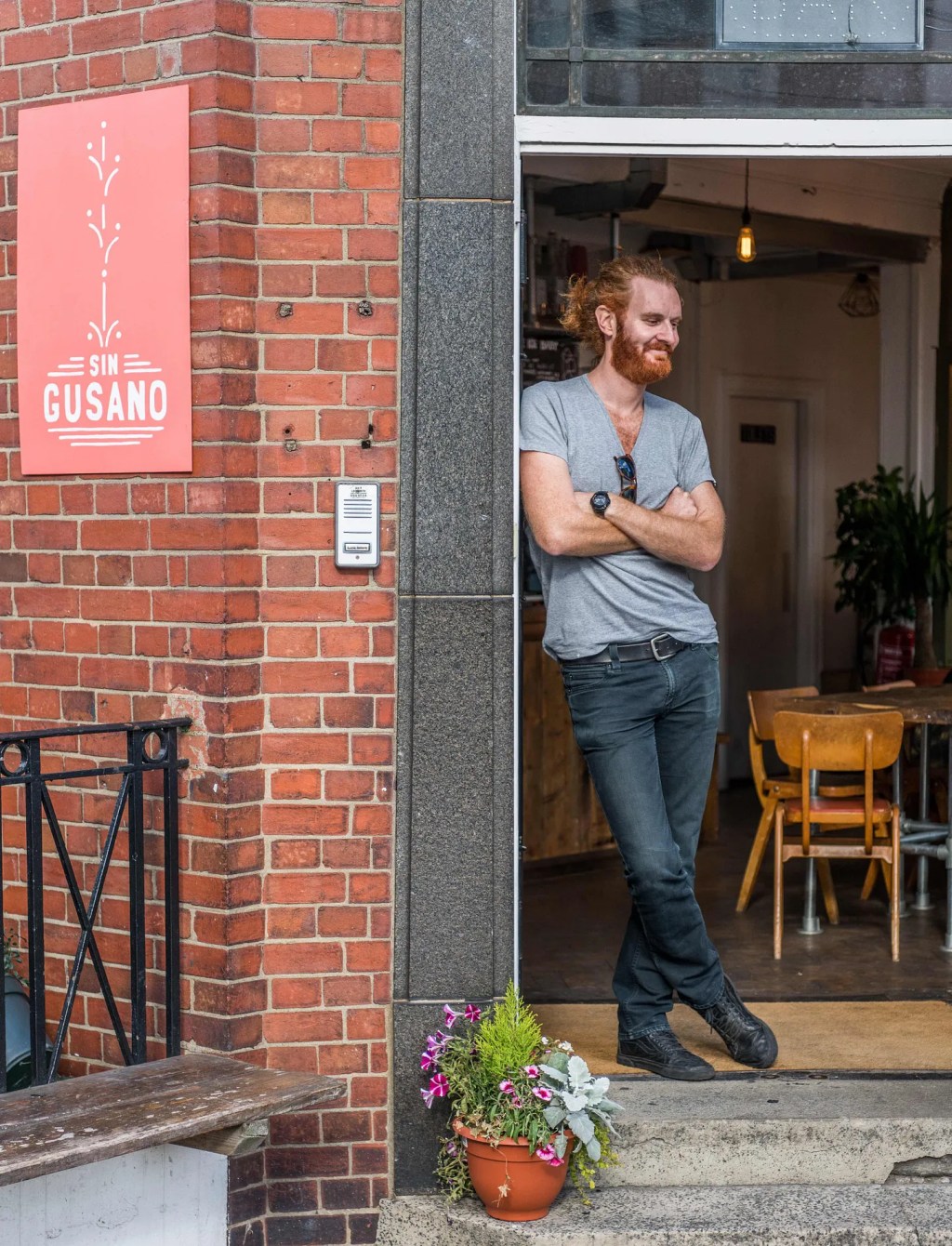
The Agaveist is focused on sharing the stories of people on the frontline of the agave spirits industry. Producers, brand ambassadors, writers and enthusiasts of all kinds. Truly, one of the most special things about this industry is the breadth of diversity in thinking and stories of why people are doing what they do.
And while there’s no shortage of fantastic agave spirits champions in Mexico in the US, it’s wonderful to see the UK having developed its own industry culture. Meet Jon Darby, a pioneer of the UK mezcal movement. He is the founder of the Sin Gusano Project, Mezcal Appreciation Society and Sorbito tasting room in London.
How did you get started in this weird and wonderful world, and how did it lead to what you’re doing now?
I feel like my entry into the agave spirits space was relatively unusual. I had a completely different career before this. I was working a fairly boring office job in London, in the finance sector. I did that for a good decade before getting into spirits. I didn’t come through the bar industry at all. I was never a bartender and had never worked in a bar before agave spirits.
I didn’t really know anything about mezcal or tequila until my first trip to Mexico in 2016, which was just a holiday. I was on a break from my normal job, which I wasn’t enjoying very much at the time. I had such a good experience in Mexico, meeting people, being inspired by the place, the flavours, the culture, that I decided to quit my job. Not because I had any ambition to work with agave, but because I wanted to stay in Mexico instead of going back to that life.
I was between teams at work, which gave me a natural jumping-off point, so instead of a one‑week holiday I stayed for three months. During that time, I was in Oaxaca, and you can’t avoid mezcal there. I started tasting more, went on palenque tours with Alvin Starkman, who runs educational mezcal tours. He took me out to see production firsthand.
One of the first places we visited was Santa Catarina Minas, one of the most famous mezcal communities. I didn’t know that at the time but one of the first mezcals I ever tasted was a Minas mezcal. Seeing mezcal being made, watching the process, being in that environment really struck me.
Coming from finance, where I felt like a tiny cog in a big machine with no real impact, this was the opposite. I’d lived through the 2008 financial crash, seen austerity, watched banks get bailed out. I was pretty disillusioned with the whole system. Then suddenly I was seeing something made in small communities, people coming together to build ovens, working collectively. It felt meaningful.
I remember thinking that this was something the UK needed to learn from. A different way of producing and consuming, instead of the constant race to the bottom and consolidation of wealth. My inspiration was big-picture: we need to rethink how we consume, how we operate as a society.
That inspiration stayed with me, but I didn’t immediately think, “I’m going to work in agave spirits.” That came later, when I returned to London at the end of 2016.
I was a whisky drinker at the time, so instead of going to a whisky bar, I tried to find an agave bar. I quickly realised why I hadn’t known anything about mezcal before. There was almost nothing happening in London. You’d ask for mezcal, get served something expensive by someone who didn’t know anything about it, and if you asked questions they’d say, “The owner knows, but he’s not here.”
I thought: this is why people aren’t inspired by this category. It’s not being presented properly. That was the moment I thought, “I reckon I could do this better.”
I went back to Mexico, travelled around places I’d been introduced to, filled a suitcase with samples, and carried it back to London. That became the beginning of what turned into the Sin Gusano project.
That reminds me of the Ron Cooper approach of him bringing things back under the counter. So how did the pop-ups turn into what you do now, including the subscription model?
It started as pop-up tasting rooms in early 2017. I took over a local coffee shop that didn’t open in the evenings and asked if I could use the space on weekends. I was selling flights of mezcal from Oaxaca.
The concept was deliberate. At that time there was little understanding of mezcal, including my own. Mezcal is such a broad category, and I didn’t want people to try one mezcal, dislike it, and write off the entire category. So you couldn’t buy a single pour. You had to buy a flight of three.
We designed flights around agave varieties, regions, styles so people had to experience at least three different flavours. Even if they didn’t like the first, they’d understand there was a spectrum. That idea of opening minds and broadening horizons has been the driving force behind everything I’ve done since.
We did three pop-ups between 2017 and 2019. Each one essentially funded another trip to Mexico, allowing me to deepen my understanding and meet more producers.
By the second pop-up, I’d started importing properly. I needed more mezcal than I could physically carry. Once we were importing, we thought: why not sell bottles as well? That’s when the idea of a brand began to form.
The subscription club came out of necessity. We were working with tiny, non-commercial batches, sometimes 60 bottles total. That doesn’t work with traditional retail. You send a sample to a retailer, they like it, and by the time they reorder it’s gone.
So I created the Mezcal Appreciation Society. The idea was to share these spirits with people who genuinely care about them, using small bottles, and embracing the fact that every batch is different. Instead of fighting inconsistency, I monetised it without ruining it.
Each new batch I source goes to the club first. If there’s anything left, it becomes a limited single release. Sometimes there’s so little that it never goes beyond the club. People don’t know what they’re getting before it arrives. They’re buying into trust and curiosity. It’s about discovering something you can’t find on wholesale shelves because there simply isn’t enough of it.
The first box went out in April 2020 right as COVID hit. Up until then, the business relied on in-person events. Everything shut down overnight. If that box hadn’t been ready, the business probably wouldn’t have survived. Instead, home delivery took off, and the subscription model carried us through the pandemic.
How did you build trust with producers and manage the logistics of getting rare mezcal into the UK?
I’ve spent an enormous amount of time in Mexico. Since that first trip in 2016, I’ve probably spent half of the last ten years there. I’m now a permanent resident. I stayed through the pandemic and married a woman from Oaxaca.
We’ve spent years on the road together, meeting producers all over the country. I’m constantly meeting new people. I was actually in Michoacán and Jalisco a few days ago. Over time you build a library of relationships. Some are long-term suppliers where I know what they’re producing year after year. Others are new connections where you start from scratch.
Deciding whether to work with someone isn’t just about flavour. It’s about accessibility, the vibe you get, production conditions, sustainability, and ethics.
The core philosophy is that I don’t want to change what producers are doing. The Sin Gusano project is the opposite of the standard brand model where you find something good and then throw money at it to scale it up a thousand times. What makes traditional agave spirits interesting is that they’re different batch to batch.
I often use the analogy of picking a berry on a country walk. You choose the ripest, best-looking one. That’s what small-scale agave producers do. They are harvesting plant by plant, not monocropping fields with agaves at different stages of ripeness. That attention leads to better results.
How do you see the gentrification of mezcal and the influence of celebrity brands?
It’s already happening. Celebrity mezcal brands exist now. Some are better than others, but overall I’m pretty anti that movement.
I tread carefully saying this, because I’m a white guy working in this space and I’m aware that my presence has an impact. You can’t do anything without having an impact. What I try to do is minimise harm by never pushing producers to overproduce or overharvest. If there’s a 150-litre batch, we’ll talk about how much they need locally. Maybe I take 100 litres and they keep 50. I’ll never ask someone to make more than they normally would.
The celebrity model leads to monocropping, environmental damage, and financial pressure on small producers. I’ve seen fields in southern Jalisco that used to be wild land now rented out by big tequila companies, planted entirely with blue agave, treated with chemicals that kill everything else. It’s visually and ecologically destructive.
The idea that a celebrity tequila will eventually lead people to better mezcal doesn’t really hold up. You wouldn’t introduce someone to fine wine by starting with sangria. You show them the good stuff first.
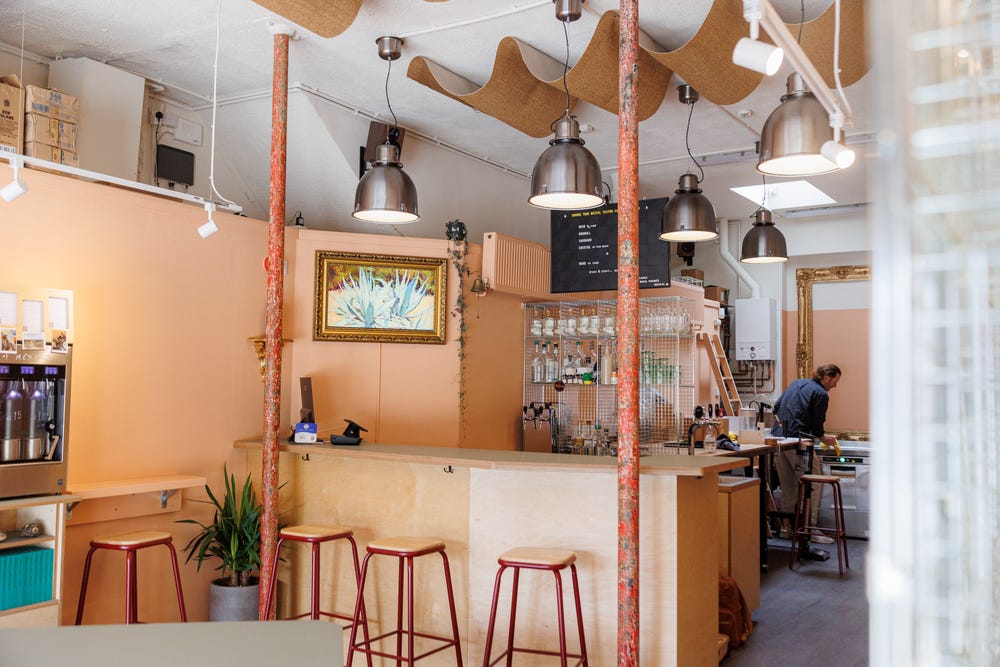
That’s always been my approach, whether through flights, tastings, or now at the Sorbito tasting room. Come and try something incredible, with context and story. We’ll go from there.
Thanks for reading Drink To That! Subscribe for free to receive new posts and support my work.
If you could change one or two things about the mezcal industry, what would they be?
I’d like wholesalers to better understand batch-to-batch variation. When a batch sells out and the next one comes in at a slightly different ABV or from a different season, that matters to us. We explain it, label it differently, contextualise it. But for wholesalers, it’s a new listing, a new process, more friction. The system encourages brands to blend batches together for consistency, which is exactly what we’re trying not to do.
On the Mexico side, regulation is a huge issue. The denomination of origin is enormous, covering a region as large as Europe with one set of rules. It encourages investment and monocropping rather than protecting micro-regions and traditional practices. That’s a whole conversation in itself, but it desperately needs reform.
The UK mezcal scene has grown significantly over the past ten years, and you’ve been right at the forefront of that.
Are there others in the UK doing work you really admire? Obviously, the guys at Quiquiriqui are interesting, but are there any other people or brands that stand out for you?
In terms of UK-owned mezcal brands, we’re really talking about a handful of people and you could count them on one hand. They’re all personal friends, and there’s a lot of mutual respect. Everyone’s doing something quite different, though. There isn’t anyone doing exactly what Sin Gusano is doing and probably for good reason. It’s absolute madness.
It doesn’t really make commercial sense. It requires a ridiculous amount of legwork in Mexico because I won’t bottle from anyone I haven’t personally met, visited, shaken hands with, and walked away from knowing exactly how they work. On top of that, there’s a huge amount of admin back here: different labels, copy proofing, small print runs with no economies of scale. So no one’s doing what we’re doing, probably because they’re not as mad as I am.
That said, there’s huge respect across the board. Melanie from Quiquiriqui was the early mover. She was really a pioneer in the UK market. Her original mezcal bar on Hackney Road was before my time. When I first came back from Mexico and tried to buy mezcal everywhere, she’d already closed by then. I would’ve loved to have gone. Big respect to her for doing that before I even really knew what mezcal was.
Ben from Pensador mezcal is also a good mate. What he’s created with Pensador’s original product of the ensamble mezcal is brilliant. For a quality bottling it’s the best value mezcal on the market right now. The current batch, AN8, is a particular steal for the quality.
Now that I’ve opened Sorbito, I’m part of what some people have called the “Mezcal Mile.” That term came from Time Out, I think. You’ve got Doña, owned by Theo who started Dangerous Don, another mate, then Sorbito, Hacha, Corrochio’s with their bar Cinco. We’re all on the same road, within about a mile of each other. Interestingly, it’s also the same road where I did my first pop-ups.
It’s nice now to have a physical space alongside good neighbours, all doing different things. We’re not a cocktail bar. People come to us for a tasting, so if they want to crack on, we can send them to Doña for a party or to Cinco for cocktails. There’s a real sense of community with different offerings but shared respect. And that feels good.
 The Agaveist
Leave a comment