It’s no secret that tequila has become a cash cow of the spirits world. But what exactly goes into building a successful and profitable tequila business that’s focused on preserving Mexican culture?
The Agaveist recently sat down with Jesse Estes, brand ambassador for Ocho Tequila to find out.
How did you first get involved in the tequila industry, and what led you to join Ocho?
I worked in hospitality and behind bars for almost 10 years. About 12 years ago, I joined the family business, Tequila Ocho. My current title is Global Brand Ambassador, but over the years I’ve worked on almost every aspect of the brand, including global sales, marketing, advocacy, new product development and outbound logistics.
Can you share more about your family’s history with Mexican spirits and what inspired the creation of Ocho?
My father, Tomas Estes, always had a deep love for Mexican culture, including the food, drinks, and people. In the 1960s he was a High School English teacher in East LA, and after a sabbatical in Europe in 1970, he fell in love with Holland. He ended up opening what we believe was Europe’s first Mexican restaurant and tequila bar in Amsterdam in 1976, Café Pacifico.
That little place became a hotspot for musicians like Freddie Mercury, the Beach Boys, and Tina Turner, among many others. Over time, he opened 18 venues across six countries. Along the way, he helped introduce tequila and mezcal to European audiences, long before the category had any real presence there. He is credited with having self-imported the first 100% agave tequilas and artisanal mezcals into Europe. The Mexican government named him the official Tequila Ambassador to the European Union, which was a big honour.
He regularly hosted trips for his staff and for journalists to Mexico to help educate them on the category. Eventually, he became a journalist and writer, authoring The Tequila Ambassador in 2012 and The Tequila Ambassador VO, which was released posthumously in 2024.
Many years ago, my father met Carlos Camarena, a fifth-generation agave grower and third-generation tequila producer. Carlos approached my dad with an idea: “Let’s start a tequila brand together.” My dad didn’t hesitate, the answer was a resounding “Yes!”
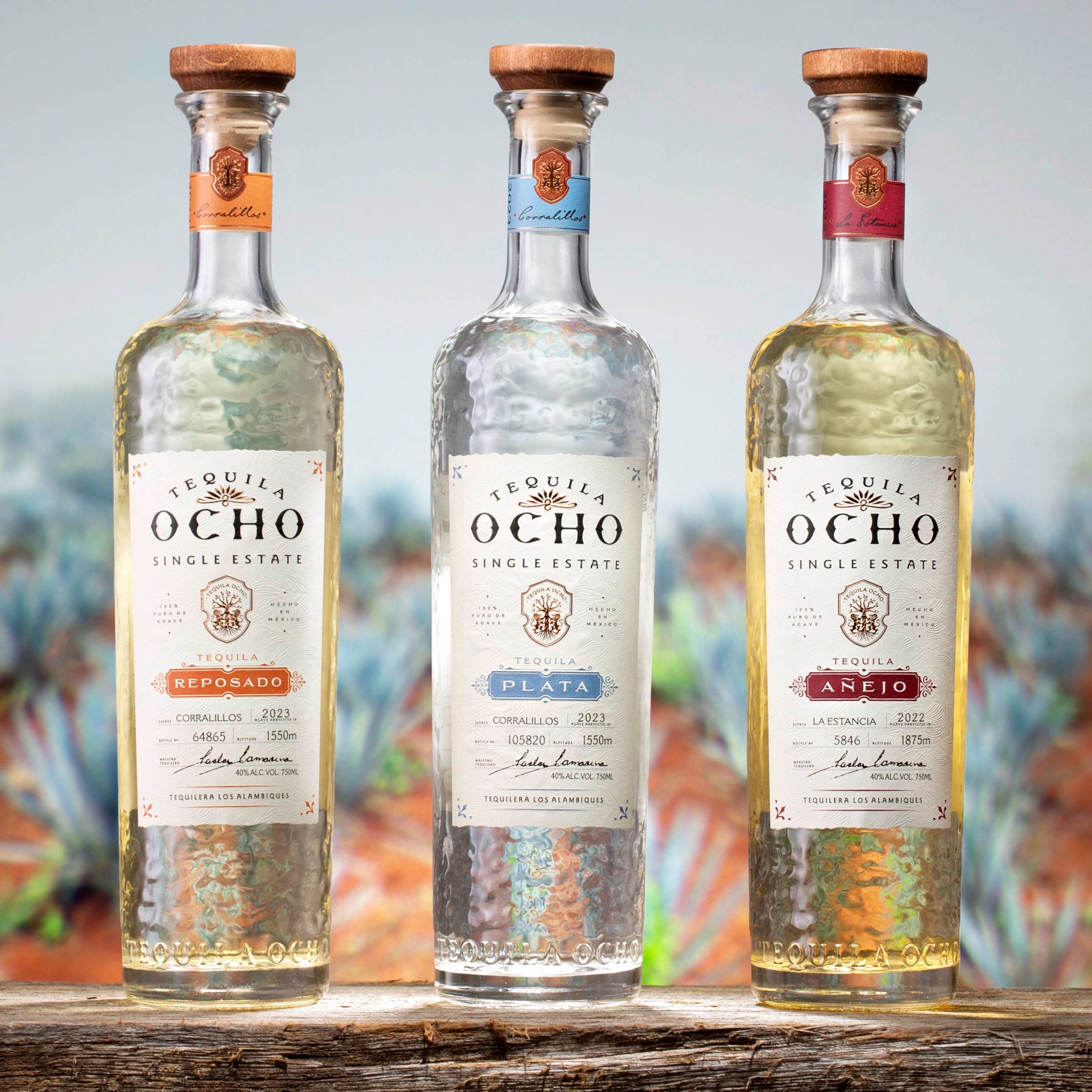
They wanted to create something they’d be proud to drink and serve that was high in agave flavour and complexity. My father also brought over his experience from the wine world, and together they developed the world’s first single-field vintage tequila, similar to a single-vineyard wine. They wanted to prove that terroir exists in tequila, and with nearly 50 different harvests now, I think we’ve done that; each single-field harvest has its own unique flavours and aromas based on the soil, microclimates, etc in which the agaves were grown.
Is Ocho’s single-field approach similar to single-village mezcal producers like Del Maguey?
Jesse: Good question. Del Maguey highlighted “the hand of the maker,” showcasing how different producers and techniques impact flavour. With Ocho, we keep the producer and production method constant. Carlos Camarena and his family produce Ocho using the same traditional methods for every batch. But the variable that changes is the fields (and the terroirs within each different rancho) from which the agaves come.
So while single village mezcals vary by producer, agave variety, and production method, with Ocho, it’s the same method and agave variety each time, but a different field. That allows us to isolate and showcase terroir in a more specific way.
Drink To That is a reader-supported publication. Consider upgrading to a paid membership to help fund independent journalism focused on discovering the latest trends and challenges going on in the drinks world.
The Ocho bottle design is quite minimal. What was the intent behind that?
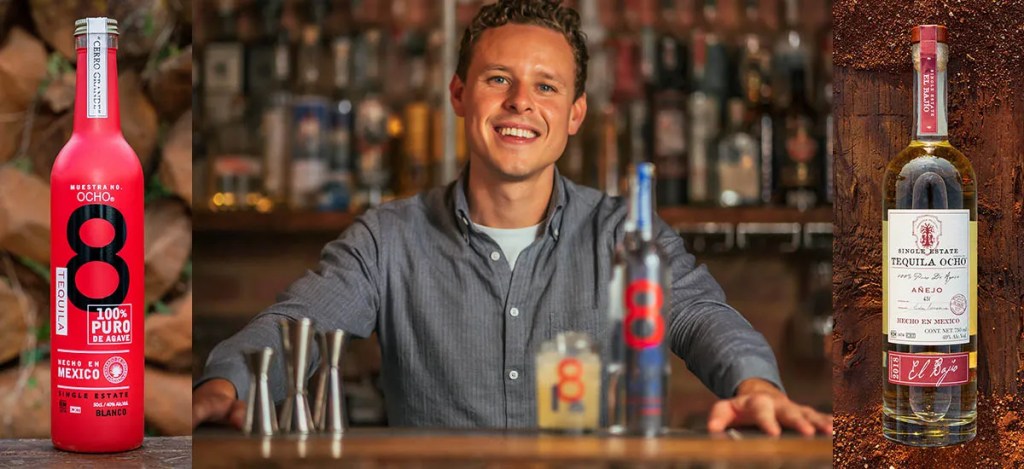
Absolutely deliberate. For the original bottle design, we wanted something bar-friendly that was ergonomic, easy to clean, and screen-printed instead of using a big paper label. Bartenders often reuse our bottles for syrups, juices or pre-batches. The practical design was a natural fit given our hospitality background. The bottle was meant to be used, not just displayed.
What’s your take on controversial practices in the industry like overharvesting or regulation?
Overharvesting is a much bigger issue in mezcal than tequila. In tequila, we use blue agave, which is essentially 100% cultivated. All blue agaves have been classed as a monoculture – genetically identical clones propagated from rhizomatic offshoots.
There’s very little genetic diversity, but also very little wild harvesting. So it’s not the same ecological concern as in mezcal, where many wild agave species are being overharvested. Concerns around the limited genetic diversity of blue agaves are a separate issue.
How do you feel about regulations, specifically NOMS and the CRT?
Regulations have value. They give the category structure, but not all rules are useful. With that said, there is a lot of value in the tequila category having an internationally- recognisd denomination of origin.
In terms of NOM numbers, that’s probably where I see the biggest misconception in tequila today. Many people, including many individuals I consider to be tequila experts, think the NOM number on a label is a reference to the exact distillery at which that liquid was produced. That’s not the case.
A NOM is tied to a holding company of sorts, not the distillery. For example, Tequila Ocho’s NOM stayed the same even when we moved production from our original home, La Alteña, to our new distillery, Los Alambiques. Our holding company (Los Alambiques) remained the same, so the NOM did not change.
There are very large brands bottled under one NOM number that are produced at multiple different distilleries. Conversely, contract distillers may use multiple NOMs across the many brands produced at their one distillery. So NOM numbers do not provide traceability, if anything it’s more of a bureaucratic labelling requirement than an indication of provenance.
So if NOMs aren’t reliable for traceability, what kind of transparency would you want to see?
If I could wave a magic wand, I’d push for real transparency, especially around additives. Right now, tequila brands don’t have to disclose if they use additives for sweetness, colouring, or mouthfeel. I think every bottle should list whether additives are used, just like food labelling. There’s an illusion of transparency in the category; in an ideal world brands would be upfront and honest about production methods, ingredients, and provenance.
How important is it for brands to promote the indigenous and local communities tied to agave spirits?
Extremely important. In a time in which celebrity brands dominate the headlines, the people behind the spirits – producers, farmers, families – can easily be overlooked. I respect foreign brand owners that highlight the producers themselves in their marketing material, and ideally give the producers equity in their brand. And better yet, consumers and bartenders can seek out Mexican-owned brands and family-run distilleries.
What trends do you see shaping the next decade in agave spirits?
I think we’ll see more emphasis in the following areas:
- Additive-free and traditionally-produced tequilas
- Family-run and family-owned brands
- Sustainability as a core value
- An increased significance placed on terroir and provenance
- Innovations within the category
Overall, I think a large amount of the growth in the category will come from brands embodying quality, authenticity, and transparency.
 The Agaveist
Leave a comment