As the agave spirits industry continues to develop, a growing number of diverse voices and brands are entering the space and telling new stories. The Agaveist is particularly interested in the growing representation of women-led agave spirits brands and creating new conversations in the space.
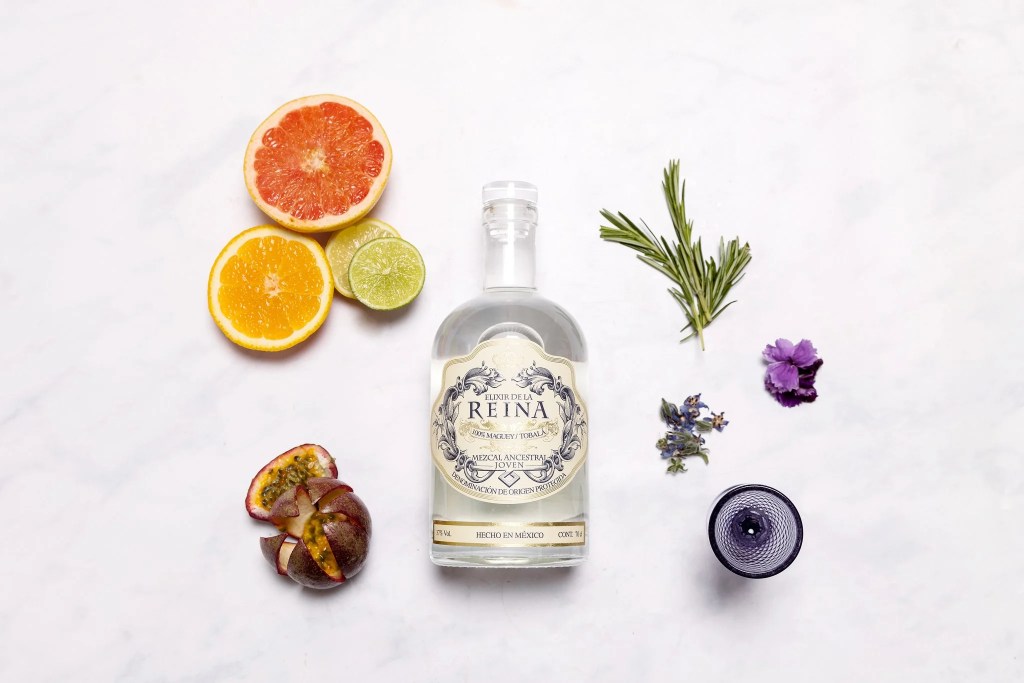
Mezcal Reina is a leader in this conversation. Founded by Susana Franyutti and Monica Torroella, Mezcal Reina is carving a respectable space in the UK agave spirits market. The Agaveist caught up with Franyutti to see what makes the brand so special and one to watch for the future.
It’d be great just to start off with, how you got into agave spirits and where the idea for Mezcal Reina came from, along with your partnership with your business partner as well.
Monica and I have been friends since we were four years old. We went to the same school together, so that’s how we met. Then, serendipitously, we both ended up in the UK about 20 or 21 years ago for completely different reasons, but at the same time, which was absolutely fantastic for us. That coincidence prompted us to start thinking about building a business together. Initially, we explored a couple of different ideas, like opening a Mexican taquería or something along those lines. But around that time, we started hearing more and more hype about mezcal, and we realised that neither of us actually knew much about it. We had experience with tequila from back in the day, but mezcal wasn’t something we really understood.

So we decided to go back to Mexico and explore it properly. We travelled around, tried different mezcals, and quickly realised that what we thought mezcal was and what it actually is were completely different things. Our perception had been shaped by what was popular in the 1980s, the kind of mezcal with the worm, which wasn’t necessarily the best quality. But when we started tasting real mezcal, we discovered an incredible range of flavours depending on the agave variety, the production process, and the region. There’s so much complexity and that really captured our attention.
What truly made us fall in love, though, was visiting Oaxaca and seeing the production process firsthand. When you witness how much work goes into making mezcal, you realise how little most people understand about it. That’s where it developed from curiosity into a passion project. We wanted to elevate mezcal and help people learn what they’re actually drinking. From there, it organically evolved into a business, which is what it is today. And very happily, we’ve recently won two awards, gold for our espadín and Mezcal of the Year for our ensamble. So, it’s been an incredible journey.
That’s a fantastic start. Now, I’ve tried some of your core range. But for those who are unfamiliar with Mezcal Reina, what do you have in your portfolio and how is it made?
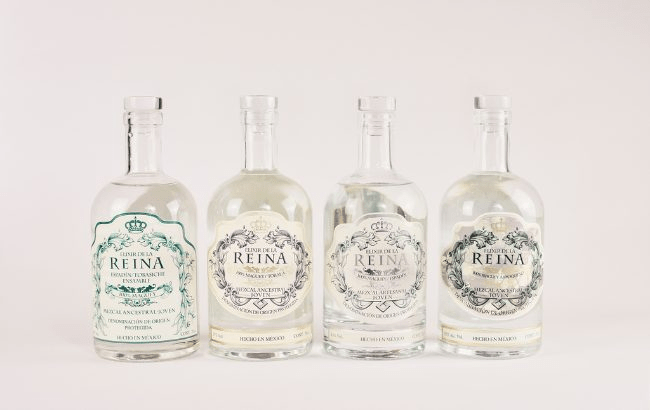
We started off with what, for us, was one of the most premium mezcals that you could possibly get, from a region of Sola De Vega where the tobala agave is endemic. We found a master distiller who was making the most delicious ancestral tobala, and that became our very first expression. When we brought it into the UK, it was, of course, an expensive product, and at the time not everybody really understood why.
People would look at a £300 bottle and think, how do I even begin to justify that? But when you start breaking it down, it’s an 18-year-old wild agave. The tobala agave became almost extinct because of overproduction in the 80s and 90s, and then had to be repopulated, so there’s a huge amount of history and scarcity behind it. On top of that, the entire process is completely handmade.
The product itself is absolutely beautiful. It doesn’t hit you with that aggressive smokiness that people often associate with mezcal. Instead, you get layers of flavour from the first sip, from the aroma in the glass, and then the texture. It’s very oily, incredibly elegant. So the product spoke for itself and people loved it, but the price point made it difficult to place, especially in bars. Direct-to-consumer, people were more willing to pay for it, but in a bar setting, asking someone to spend £50 on a shot is simply not viable from a business perspective.
That’s when we started thinking about how to make a style of mezcal more accessible and affordable. So we developed our ensamble. This is a blend of two agave plants. You’ve got a wild or semi-cultivated agave, a tobasiche, aged around 12 to 15 years, which is specific to a region in Oaxaca. Most people call it by one name of karwinskii, but in Oaxaca they use tobasiche, and the flavour profile shifts slightly because of that. Then we blend that with espadín, which makes up about 70% of the mix. espadín isn’t inferior. It’s still a beautiful agave, but it grows faster and is farmed more widely, so it brings the cost down.
By blending them, we’re able to give people the experience of those older, more complex wild agaves at a more approachable price point. That’s how the ensamble came about, and it’s been really important for us in terms of getting mezcal in front of more people, especially in bars.
Then we wanted to create something unique with a special edition mezcal. For that, we used arroqueno agave that takes around 22 to 25 years to mature. It’s not cultivated, so you have to go out and find it. That alone tells you how rare it is. The mezcal itself has incredible depth, very oily again, very layered. When we distilled it, it came out at 53% ABV, and when we tried to bring it down after the second distillation it said “no, if you touch me I won’t taste very good.” It lost something essential. So we decided to keep it at that strength.
We only produced around 248 bottles, and we collaborated with an amazing artist from Oaxaca, Sabino Guisu, to design the label. He has an incredible studio there, he creates everything from sculpture to woven art, and the whole project was about celebrating that craft heritage. It’s our most premium expression. It sells slowly, but when someone who really understands mezcal tries it, they immediately recognise it. They say it’s the best mezcal they’ve ever tasted, and that’s exactly what we wanted to achieve.
It’s great to hear the stories behind those products. Thinking more about the wider agave spirits market now, it’s clear that tequila and mezcal have been popular in the US for some time.
But what’s interesting for me is it seems the UK agave spirits market is rapidly maturing and developing its own character. What are your thoughts on any similarities or differences in the UK and US markets?
I don’t have a huge amount of experience with the US market. It’s not something we’ve really wanted to tap into, partly because it’s already very oversaturated. Being so close to Mexico, they had that initial wave of mezcal much earlier, and it’s obviously much easier logistically to move product into the US than it is all the way to the UK.
In the UK, I think there’s still a lot of misinformation about mezcal. People often think it’s just something like tequila, or a type of tequila, or it gets grouped together in that way. But in reality, tequila is a type of mezcal, not the other way around. That distinction still isn’t widely understood.
In the US, tequila helped create a framework for understanding agave spirits. People were already having conversations about different tequila styles, regions, and quality levels, whether something was from Los Altos, whether it was craft, how it was produced. There was already a segmentation in the market, with different categories and price points, which made it easier for mezcal to come in afterwards.
In the UK, we’re not there yet. For many people, tequila is still associated with having had a bad experience once and never wanting to touch it again. That perception carries over into mezcal. So when we’re trying to introduce mezcal, we’re also undoing those preconceptions as well as introducing a new category.
That’s why we’ve shifted how we explain it. Instead of comparing it to tequila, we compare it to whisky or wine. People understand smoky whisky, so that gives them a reference point. We explain that instead of ageing in barrels, mezcal is effectively aged in the plant itself over many years. We’re slowly adapting the way we communicate to fit the British mindset and help people understand the category on its own terms.
That’s interesting. A big focus of The Agaveist is also raising awareness about other lesser known Mexican spirit categories like raicilla, bacanora and sotol.
What are your thoughts on those categories?
I think all agave distillates are beautiful when you find the right product, but not every product is for every palate. Personally, I really love raicilla. There’s one brand I can find relatively easily in the UK called La Venenosa that I think is absolutely delicious. I find bacanora more challenging. I sometimes find it a little too woody or too strong, but that’s just my personal preference.
Sotol is completely different because it’s not even made from agave as it comes from desert spoon. And what’s really interesting is how much the environment affects the plant. Different regions produce completely different flavour profiles. Climate plays a huge role, how dry it is, how much rain there is, how the plant stores its sugars.
I was talking to the delegation of Yucatan recently and they told me they make agave distillate as well. I thought that was interesting because the climate of Yucatan is hot and there is a lot of rain out there too, so all of that will make agaves grow differently.
For example, Oaxaca has this incredible balance of dry and rainy seasons, which allows the agave to develop beautifully. During the rainy season, it builds up its sugars, and during the dry season, those sugars concentrate in the piña. That’s why the agaves from Oaxaca are so rich and complex.
I always compare agave to wine. If you like a certain grape, you’ll generally enjoy wines made from that grape. It’s similar with agave. Once you understand what you like, you can explore within that. And there’s also fascinating work being done looking at how different agaves affect you emotionally, not just in terms of flavour, which adds a completely different dimension to the experience.
The agave spirits industry is traditionally seen as male-dominated. But it seems in recent years there is more female representation. What is your perspective on how women are treated in the industry and do you feel there is better representation?
It really depends on which part of the industry you’re talking about. In terms of production, especially distillation, it’s still very male-dominated, particularly in Mexico. We do work with a female master distiller, though, and her story is incredible. She took over after her husband passed away very young, leaving her with three children and a distillery. She built that into three distilleries, but it wasn’t easy. At the beginning, nobody would listen to her. She had to constantly fire people because they wouldn’t respect her authority, even though she was the master distiller.
Now she’s retired and has passed everything on to her son, but she’s still around, and it’s amazing to see what she built. At the same time, a lot of the administrative roles in distilleries are held by women like accounts, labelling and operations. So there is a space for women there that feels more natural, without needing to fight for it in the same way.
On the business side, being a female founder is challenging regardless of the industry. There’s still a tendency to assume that certain roles, particularly financial ones are held by men. I’ve had people ask to speak to my CFO, assuming it must be a man, even though I’m deeply involved in every aspect of the business. I didn’t start out knowing how to read a balance sheet, but after years of doing this, of course I can.
I also think a lot about how we build our team. I like working with women who have families, who are busy, because they tend to be incredibly efficient. They know how to manage their time, they’re focused, and they deliver. I want people to feel comfortable being honest. If their child is sick, they can say that, but they’ll still get their work done. That creates a very strong, loyal team. For example, our Head of Marketing has recently bought a house and she’s in the process of moving, and I know she’ll have taken care of everything even in that busy period and I’ll still give her the space she needs to sort out important milestones like that.
At the same time, there are challenges, especially working in nightlife environments. Lines can get crossed. I’ve been around a lot of drunk people and I’ve tried to be bubbly and I’ve had people misinterpret things. I’ve had situations where people behave in ways they wouldn’t with men like certain comments and inappropriate behaviour, and it’s something you have to navigate constantly.
Thanks for your candiness there. I think it’s important to share the true realities of what it’s like to work in the industry within specific contexts, as it can be helpful for others who are going through similar circumstances.
The agave spirits industry really is no stranger to controversy. I’d like to hear what you think of the regulations involved in mezcal.
I’m in two minds about this. If you had asked me a couple of years ago whether I was okay with something being labelled as an agave distillate instead of mezcal, I would have said absolutely not. For me back then, the certification was everything. It takes so much work, time, and money to get properly regulated and to carry that official certification, and there is a reason those structures are in place.
So my position used to be very clear. If it doesn’t have that certification, if it doesn’t have that official stamp, then it shouldn’t be considered mezcal.
But as I’ve spent more time in the industry and really got to know different producers, not just small ones, but producers in very complex situations, my perspective has changed. For example, in a conversation we’ve had, I was telling you about a distillery in Guerrero that we’re looking to work with. It’s not a small distillery at all, but their production remains limited because of where they’re located. They’re in a region where there are significant political and security issues. There are narco-related challenges, conflicts over land and power and that makes it incredibly difficult for them to operate freely, let alone expand.
Now, these producers make one of the best mezcals I’ve ever tasted. Truly exceptional. But they can’t get certified and it’s not because they don’t meet the standards. No certification body is willing to go where they are. It’s simply too dangerous because they are afraid they might get their heads chopped off by narcos. Realistically, if someone asked you to travel into the middle of the jungle in Guerrero, where there’s a genuine risk to your safety, you wouldn’t go either. Even if certification were technically possible, the cost would be enormous. They’d need security, insurance, convoys etc and it just becomes completely unfeasible.
In a case like that what do you do? We’ve made the decision that the product won’t be labelled as mezcal. We’re going to label it as agave wine Historically, that’s not inaccurate. The earliest versions of these spirits weren’t even called mezcal. The name came later, and there are stories about how distillation techniques were introduced, even influenced by Filipino methods brought over during colonial times. So the terminology itself has evolved.
For me now, what matters most is transparency and integrity. If we bring something like that to market, we’re clear about what it is. We’re not trying to pass it off as something it isn’t. But at the same time, I’m not going to dismiss the quality of that product just because it doesn’t carry a certification that, in this case, is impossible for them to obtain.
This is where it becomes more complex, because certification systems themselves are not always perfect. You start to see how power structures work, how large players can influence things, and it raises questions. We’ve seen this in other categories. There are ongoing debates around tequila, for example, around what is allowed under certification versus what should be allowed. So you begin to realise that a label alone doesn’t always tell the full story.
That’s why, for us, it goes much deeper. It’s about knowing the producer, understanding their ethos, and looking at the full process. Are they farming responsibly? Are they using seed propagation instead of just cloning agaves? How are they handling waste? Are they composting the leftover fibres instead of burning them and creating pollution? Are they reusing water during distillation rather than wasting it?
All of these factors matter. There’s so much that goes into producing a good mezcal or agave spirit that goes far beyond what’s on the label. So yes, certification is important, and if it’s possible to obtain it, it absolutely should be there. But it’s not the only measure of quality anymore. It really comes down to trust, relationships, and a deep understanding of how that product is made from beginning to end.
You also have some upcoming RTD products coming out. What are they and why did you create them?
We’re bringing out a Paloma and a mezcalita RTD, and we’re really excited about them. The mezcalita is interesting because we’re not using triple sec. It will only have the mezcal, alongside chinotto fruit, which gives it a much cleaner, more authentic taste.
The reason we decided to go into RTDs comes back to accessibility. Mezcal, as much as we love it, can be intimidating. It’s expensive, it’s strong, and for a lot of people in the UK, it’s still unfamiliar. So the question for us was: how do we introduce mezcal to people in a way that doesn’t scare them off?
Cocktails are the obvious answer, because the UK is a cocktail-driven market. People are comfortable with them, they enjoy them, and they understand them. So by putting mezcal into a ready-to-drink format, we’re giving people an easy entry point. You don’t need to know how to mix anything, you don’t need to understand the category. All you need to do is open it, pour it over ice, and enjoy it.
At the same time, consistency is important. With an RTD, you know that every time you drink it, the balance is going to be right. That’s not always guaranteed if you’re ordering a cocktail somewhere, depending on who’s making it. So there’s a real advantage there as well.
It’s been a long process to get to this point, because there are so many factors to consider like flavour stability, shelf life, balance, making sure it still represents the quality of the mezcal itself. But we’ve taken the time to get it right, and we’re confident in the result. For us, it’s about creating a gateway into mezcal that still respects the integrity of the spirit.
That’s exciting stuff. Looking to the future, what makes you hopeful for the mezcal industry in the UK market?
What makes me hopeful, more than anything, is that people are genuinely interested. There’s a real thirst excuse the pun for knowledge. People want to understand what they’re drinking now in a way that they didn’t before. We’ve definitely shifted away from a culture of just drinking for the sake of it, towards something much more conscious and considered.
Consumers are asking more questions. They’re thinking about what they’re putting into their bodies. They care about quality, about ingredients, about whether something has additives or not. And mezcal fits very well into that conversation because, when it’s done properly, it’s a very clean spirit. There are no additives, no artificial flavourings. It’s the agave, the process, and time.
Even things like calorie content come up now, which might sound a bit superficial at first, but it’s quite telling. I had someone ask me recently how mezcal compares to gin in terms of calories, and when I explained that it generally has less sugar and fewer calories, her response was immediately, “Oh, then I have to try it.” So these details matter to people, and they’re part of a broader shift in how we think about consumption.
What’s encouraging is that people are starting to prioritise quality over quantity. They’re willing to drink less, but better. They want something with a story, with provenance, with integrity. And mezcal, when it’s positioned and explained properly, offers all of that.
So for me, that’s where the optimism comes from. It’s not about rapid growth or hype. What matters is a deeper, more meaningful engagement with the category. I think that gives mezcal a really strong foundation to grow in the UK in a sustainable way.


Leave a comment