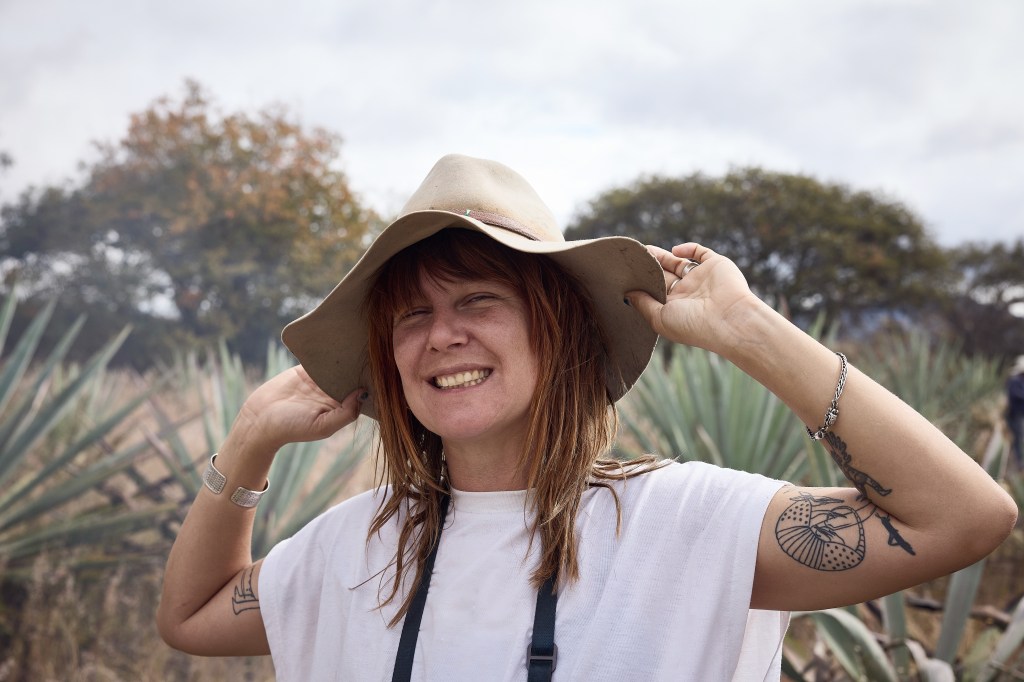
We all come to agave spirits in our own way. For journalist, photographer and author Anna Bruce, a project with the Mexican Foreign Ministry changed her life and she’s been on the path of agave spirits promotion ever since.
Along with her work appearing on prestigious agave spirits journals like Mezcalitas and her book Tequila, Mezcal & More, Bruce also runs Rambling Spirits with her partner Brooks, where they manage mezcal focused travel experiences in Mexico.
In this interview with The Agaveist, Bruce shares her thoughts on mezcal and tequila storytelling, living in Mexico and her perspective on industry trends and regulations.
It’d be great to start off with how you got into mezcal and tequila generally, and then how it led you to do what you currently do now.
I travelled around Mexico when I was eighteen, and that was due to having Mexican lodgers growing up. My family always had people from different countries living with us. They were usually in Oxford doing English courses, and I particularly bonded with these Mexican girls. I travelled with them and was looking for opportunities to come back and see them again. It was honestly pretty simple. At the time I was working as a journalist photographer in London with no money, so flights were out of reach.
Somebody mentioned that the Mexican Foreign Ministry had an open call for projects designed to change British perceptions of Mexico. This would’ve been around 2012. Around the same time, they were telling me mezcal was really changing, and I’d started seeing a few mezcal brands appearing in London. Melanie Symonds had just opened her mezcal speakeasy underneath a kebab shop in Hackney, and I thought maybe mezcal was starting to gain traction.
I looked into it more deeply and realised it was an interesting lens through which to talk about family values, sustainability, national pride, and craft traditions. It even had parallels with Scotch whisky, which I felt UK audiences could immediately understand. With support from the embassy and the Foreign Ministry, I pitched a project about mezcal and they sent me to Mexico for six weeks in July 2013.
That trip completely changed things for me. Initially it was simply a way to come back to Mexico and see friends. I’d tried mezcal before, but staying with mezcal-producing families was a completely different level of immersion. I’m not really from a foodie background as I’m interested in stories, but spending time with those families, understanding their lives and traditions more deeply, was genuinely life-changing.
Part of the agreement with the Foreign Ministry was that the work needed to be exhibited or published in both Mexico and the UK. I eventually exhibited the project at the Wahaca restaurant group in London, back when there were only a couple of branches. Thomasina Miers generously bought the entire exhibition, and the work stayed permanently displayed there until the restaurant closed years later. Because of that, people in the industry began stumbling across my work organically. Tom Bartram from Specialty Brands saw the photographs there and started reaching out.
At the same time, I’d returned to Mexico to exhibit the project again and strengthened friendships within the mezcal community. The following year Tom invited me on a large immersive tour through different agave-producing regions of Oaxaca, Michoacán, Jalisco, Mexico City, and that was the point where I started taking the work more seriously on a professional level. I became increasingly interested in the nuances of the category and the people behind it.
Through that project and everything since, you’ve built up a huge portfolio of photos and stories across agave spirits.
How would you describe your particular style, either visually or from a storytelling perspective? Are there themes you’re trying to bring out?
My first love and comfort zone was definitely photography more than writing. I’d always done a bit of writing because in fast-paced UK journalism you were expected to provide captions and supporting copy, but I wasn’t writing long-form stories at that point.
With that first mezcal project I had to produce more of a report, and through the exhibitions I needed to write biographies and contextual information about why I was there. But I wasn’t doing storytelling in the deeper sense yet.
As those early projects gained attention, brands and distributors started using my photographs. A lot of it was amazing, but sometimes I’d see my images paired with writing that wasn’t particularly well researched or felt awkward. I’d show the finished pieces to mezcal families and they’d ask, “Why did you say that?” and I’d have to explain that I hadn’t written the article. I’d only provided the photographs. That made me much more cautious about where my work appeared.
I realised that if I wrote the stories myself, I’d have far more control over how those narratives were presented. Around that time I started reaching out to Mezcalistas. They’d featured my photography years earlier, and I eventually asked whether they’d be interested in me writing for them as well. Susan Coss, the editor, was receptive and asked what I wanted to focus on.
As always, I was most interested in family stories. I wanted to write profiles, whether of brands, producers, or families and explore how they’d arrived where they were, what made them different, and how their stories connected to the spirit itself. I’ve never really been the person writing extensive tasting notes. That wasn’t my background.
My first major piece for Mezcalistas ended up being about the family behind Lost Explorer before the brand had taken off. Since then, my work has largely stayed in that direction: long-form profiles, usually two-to-three-thousand-word deep dives into particular families, producers, communities, and the social or historical reasons behind their place in the industry.
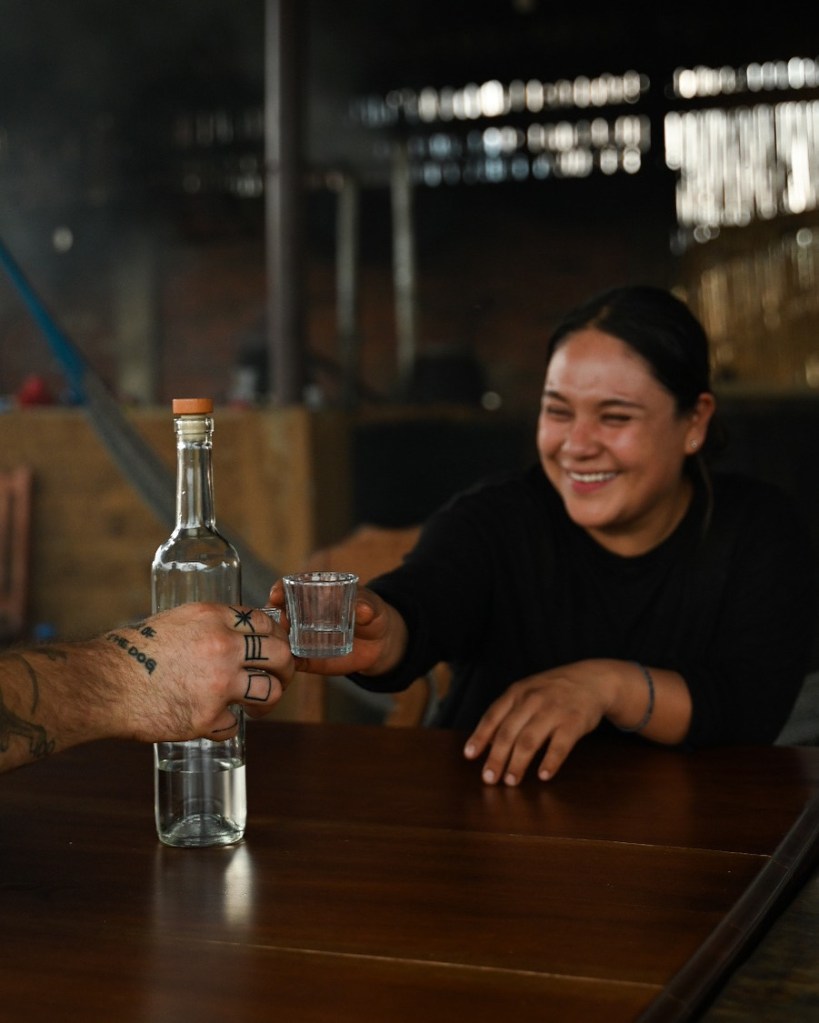
Rosario Angeles sharing a mezcal with guests from Rambling Spirits. Credit: Anna Bruce.
A lot of my work is interview-led because I’ve always been conscious of being an English woman living in Oaxaca writing about a niche and culturally important topic. I try to lean heavily on the words and perspectives of the families and producers themselves.
That style of storytelling eventually led to my book Tequila, Mezcal & More. The publisher Octopus, part of Hachette had read my work in Mezcalistas and asked whether I could create something broader that still carried the same narrative style. That meant incorporating not just mezcal, but also raicilla, bacanora, and even sotol because of its close relationship to agave culture. They also wanted it to remain approachable for UK readers by including some brand references and contextual framing. It was definitely a challenge, but it was those family-driven stories from Mezcalistas that opened that door for me.
When you’ve been writing about these families, has there been anything particularly surprising or memorable that stands out?
A lot of them are incredibly eccentric characters. In the earliest years I remember being shy going into people’s homes. My Spanish wasn’t very good, and I worried about whether I’d be able to communicate at the level needed to create genuine intimacy in these stories.
What I quickly discovered was that many of the people I spoke to didn’t speak Spanish as their first language either. They spoke Zapotec primarily and then Spanish with me, which made the communication easier in some ways.
I also worried initially that people might think it was strange that this English woman was suddenly appearing in their homes with a camera and notebook. But quickly I found that many of the men were proud of their product and genuinely excited that someone from abroad was interested in it at that level. They were very open and enthusiastic about being photographed and interviewed.
The women were sometimes more reserved initially, but because I was also a woman there was a different kind of openness there too. Over the thirteen years I’ve been here, watching women in the industry gain confidence has honestly been one of the most exciting shifts I’ve seen.
Some of the stories themselves are unforgettable. Recently I’ve been working with a brand called Mezcal Guey, whose mezcalero is an ex-bull rider. He used to disappear to different towns without telling his family, compete in bull-riding events, win accolades, and then come back. People called him ‘The Lonely One’ because he always travelled alone. Even now, when I photograph him in a mezcal context, he’ll still put on his old bull-rider outfit because it’s such an important part of his identity.
On the women’s side, things are evolving in fascinating ways. Some women now very openly identify as mezcalera and physically work in the palenque in roles historically associated with men. Others are more involved in the buying, selling, directing, and decision-making side of the business. The language around those roles is still evolving too. Watching women define those identities for themselves and explain them in their own terms has been incredibly exciting.”
From your perspective, how have you seen women’s roles in the mezcal industry evolve over time?
It’s definitely not a simple, one-directional thing. A lot of mezcal production is physically demanding, and there are realities around that. But physical labour isn’t the only measure of authority or expertise.
A woman might not be lifting heavy agave all day, but she may absolutely know which agave should be cooked at a particular moment or what flavour profile the still is producing during a certain cut. She can still be making the directorial decisions and effectively be the maestra, even if she isn’t physically doing every stage herself.
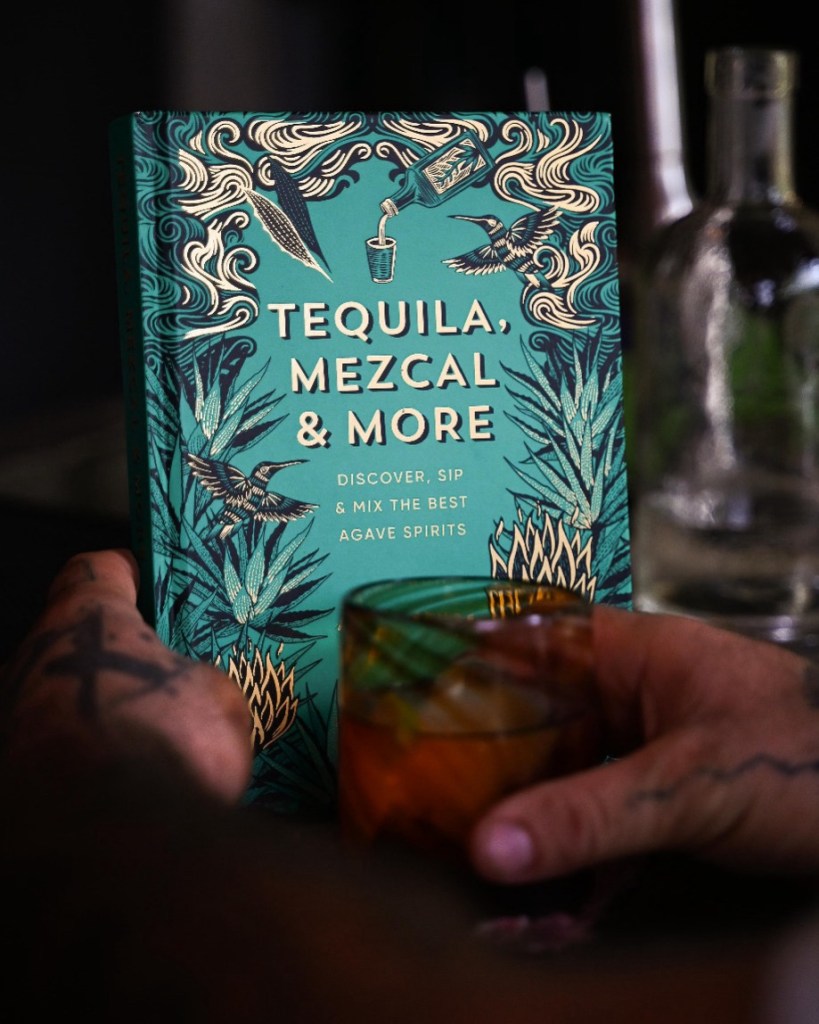
Anna Bruce’s book Tequila, Mezcal & More. Credit: Anna Bruce.
Ten years ago, when you visited many distilleries, there was usually an obvious structure where the father or male figure was visibly in charge and physically doing the work. As women’s roles expanded, it complicated those older assumptions and also complicated the language people like me use when writing about it.
Back then there were only a handful of women whose names repeatedly came up. People like Berta Vasquez, Reina Sánchez, or Graciela Ángeles from Real Minero. In the art world you often hear people say, “Of course there are women in the industry,” and then they list the same few names. That almost highlights how few women were publicly recognised at the time.
I think that’s shifted significantly now. Some of it may be post-pandemic, some of it may simply be the growth of the market itself, but there’s been far more sharing of knowledge through lectures, events, collaborations, and open discussions. People like Graciela and her sisters were hugely influential in encouraging that openness and moving the industry away from secrecy and suspicion toward collective discussion about what’s working and what isn’t.
As larger companies started entering the industry and buying up product, conversations around sustainability, fairness, and knowledge-sharing became more urgent. Women have been an important part of that dialogue. It’s been one of the most positive developments I’ve seen in the mezcal world.
You mentioned bacanora, sotol, and raicilla in your book. What are your thoughts on those categories and where they could grow internationally?
They’re regional spirits. Bacanora belongs to Sonora, so in Oaxaca we don’t necessarily have easy access to it, and the same is true for raicilla and even tequila to an extent.
Tequila is different because it already carries this huge global identity and stigma at the same time. It’s the category that introduced agave spirits to the world, but if you ask for tequila in certain parts of Oaxaca you might still get a funny look.
One of the interesting things about festivals like Agave Heritage Festival in Tucson was that the conversations extended far beyond just drinking. There were discussions involving farmers, scientists, sustainability experts, and producers talking about erosion, biodiversity, and the broader cultural uses of agave. Seeing bacanora producers from Sonora engaging directly with people from the US in that way felt different from the more internally developed culture around mezcal in Oaxaca.
Bacanora and sotol are much smaller categories, and in some ways that can make them easier for international audiences to understand. Mezcal is complicated. You’ve got countless agave varieties, production methods, regions, and traditions. Asking someone to immediately understand mezcal is almost like asking them to instantly understand the entirety of wine culture.
With something more niche like sotol or bacanora, the conversation can sometimes feel more approachable.
I love sotol personally. Outside Oaxaca it’s probably the spirit I drink most often. We also have a plant in Oaxaca called cucharilla, which is related to sotol, although because of the denomination of origin rules it can’t legally be called sotol here.
The flavour differences are fascinating. Oaxacan cucharilla tends to be more cinnamon-like and slightly habanero-esque, while northern sotols are often grassier and fresher. It really highlights how much terroir, geography, and plant age affect these spirits.
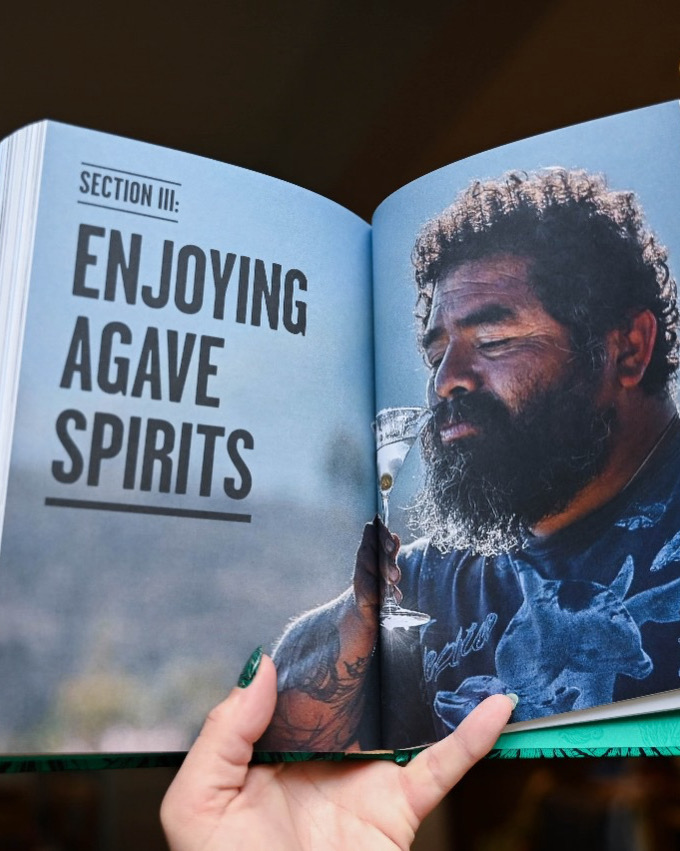
A portrait of Jose Santiago, a producer for Noble Coyote mezcal featured in Tequila, Mezcal and More. Credit: Anna Bruce.
Do you think there’s a specific character to the UK agave spirits scene compared to the US or Mexico?
The US is so broad that it’s difficult to compare directly. California obviously had access to agave spirits far earlier because of geography. Then places like Chicago developed strong scenes because of large Mexican populations.
I’d say London and New York probably developed in somewhat similar ways, especially through bartender-led enthusiasm. Bartenders were the people saying, “We want this spirit, and we’re willing to educate our customers about it.” That commitment from bars and distributors was incredibly important.
London has one of the most exciting bar scenes anywhere, so it makes sense that agave spirits would attract attention there. Outside London, though, growth has definitely been slower. When I lived in Edinburgh before moving to Oaxaca, mezcal was barely present at all in the UK, but there was a few interesting bars starting to emerge.
What’s been interesting is that the growth of mezcal in the UK hasn’t happened in isolation. Interest in Mexico more broadly has expanded too with textiles, regional cuisines, traditional crafts, all of it. People are beginning to understand that Oaxaca is different from Yucatán, that Mexican food isn’t simply Tex-Mex, and that there’s enormous regional complexity there.
I don’t think mezcal should exist in a vacuum. It should be connected to the broader cultural stories, crafts, and traditions of Mexico. Even my original project for the Mexican Foreign Ministry wasn’t just about food or drink. It meant opening a small window into the complexity of Mexico as a country and showing British audiences that it couldn’t simply be reduced to stereotypes or political headlines.
The fact that all of those different cultural elements are now arriving in the UK simultaneously is incredibly positive.
Have you ever had to balance journalistic integrity with industry politics or regulations?
I haven’t personally been heavily affected by regulations themselves. The only formal restrictions I encountered were during my original Foreign Ministry-funded project, where I had to agree not to engage in political activity.
Where I do become cautious is when producers tell me things during interviews that could potentially place them in danger within their communities or create issues around certification. If someone says something that could genuinely harm them, I simply won’t include it. I’m not interested in exposing people for the sake of creating sensational content.
So yes, there’s a degree of self-censorship there, but it comes from wanting to protect communities and relationships rather than avoiding difficult subjects.
More broadly, what are your thoughts on regulation and certification in mezcal?
It’s a nuanced issue. I’m naturally an optimistic person, and I want to believe that many of the original intentions behind regulation were good. The idea was to create parameters that would help consumers understand what they were buying and help producers sell their products more effectively.
Without regulation, the category becomes complete chaos for newcomers. At the same time, this is a five-hundred-plus-year-old industry with enormous regional diversity, and there’s no way to define that perfectly within rigid systems.
Certification bodies like the CRM aren’t just about laboratory tests. They also attempt to preserve traditional production methods, and that’s complicated. People across mountainous regions of Mexico have developed incredibly diverse ways of producing mezcal, and no system is ever going to capture all of that neatly.
Do I think there are problems? Absolutely. Large companies are now involved, and there are understandable concerns about influence, corruption, and commercial pressure. Most people in Oaxaca believe some of those dynamics exist.
But I also don’t think it’s particularly productive to simply say everything is corrupt and throw the whole system away. You have to start somewhere. Ideally these regulations become foundations that evolve and improve over time rather than rigid structures that destroy diversity.
There are many people including some close friends who are far more critical of certification boards than I am. I completely understand their concerns. I just tend to approach it from a slightly more optimistic perspective.
My last question is what brands or projects would you recommend right now?
I’ll always recommend John Darby’s Sin Gusano project. I’ve supported it since the beginning, before he’d even fully figured out his direction in agave spirits. What he’s done in exploring unusual varieties and travelling into remote parts of Mexico to learn directly from producers is genuinely impressive. The fact that people in London or Manchester can now access some of those spirits is incredible, and hopefully it encourages drinkers to look beyond the larger commercial brands.
Pensador has also long been a favourite. They source from the Miahuatlán region of Oaxaca, which supposedly has chalky, nutrient-rich soil that creates these sweet but complex mezcals. I particularly like their ensemble approach of combining Espadín with Karwiński varieties because it balances accessibility with regional identity.
Quiquiriqui has also been hugely important. Melanie Symonds’ bar was one of the first places that genuinely made me think mezcal could work in the UK market. She’s done an enormous amount to build interest in the category with Quiquiriqui too.
Dangerous Don was also fascinating early on because they were experimenting with destilados and flavour-driven approaches long before that became fashionable. They were incorporating ingredients like coffee in ways that still respected the mezcalero’s original vision.
In the US, Noble Coyote is probably the project I’ve spent the most time with. I’ve become close to one of their producers, who makes the Jabali, and I genuinely think the mezcal is incredible.
That said, one of the most exciting things about agave spirits is the sheer diversity. Any day of the week you can drink something completely different that still reflects the landscape, the raw material, and the people behind it. I don’t really think there’s another category that expresses place and personality in quite the same way.


Leave a Reply