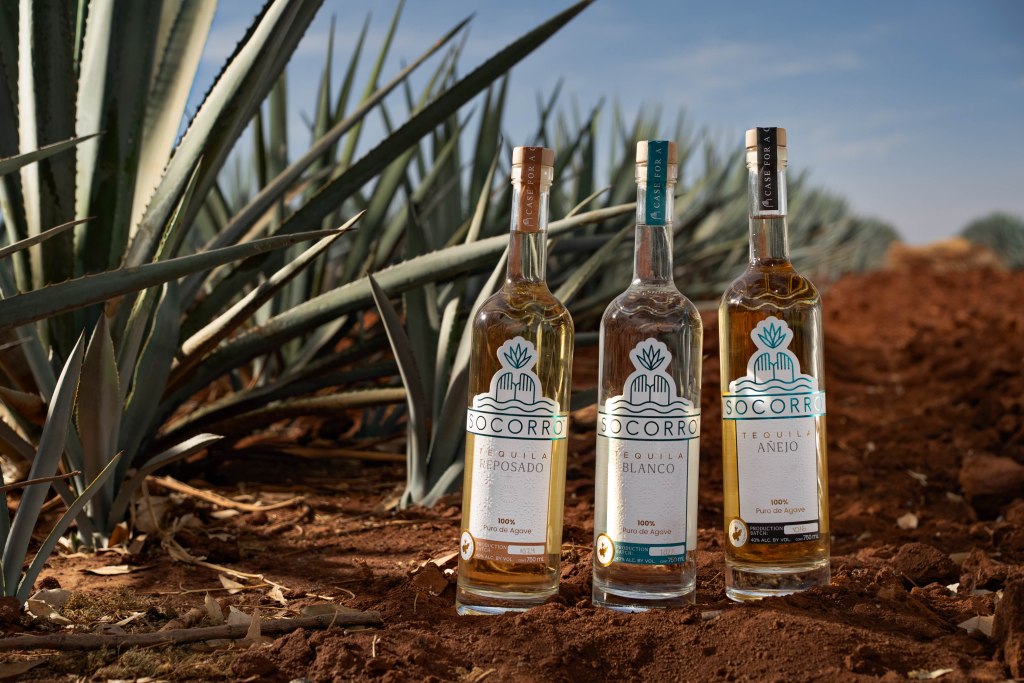
Pablo Antinori is the co-founder of Socorro tequila and I & Agave Spirits. Through passion, serendipity, hard work and grit, he’s shepherded Socorro into becoming one of the most exciting and dynamic craft tequila brands of the last decade.
In this interview with The Agaveist, Pablo discusses his early career in transitioning from wine making into tequila making, how Socorro became the official tequila for American Airlines, the state of craft tequila in Texas and making kick ass products that are pushing the boundaries of what’s possible in the industry.
In your early career, you were an apprentice winemaker in Tuscany. How did you get into that and what lessons did you learn from that experience that helped you to transition into tequila making?
I moved to Texas in 2001, when I was 18, and started out working at Target before moving into waiting tables at a Tex-Mex restaurant. I eventually moved to California, where I started taking college classes, including philosophy, Italian and a small wine course. I fell in love with wine and decided I wanted to pursue it properly, so I took a more comprehensive wine certificate covering wine history, tasting, horticulture and the growing side of winemaking.
After returning to Texas, I studied with the International Sommelier Guild for nine months, attending classes every Sunday from 11am until 7pm. We had an amazing teacher, and the course was a brilliant experience because everyone shared the same interest in wine. We would taste wines, learn about them, and bring food to share. It was a beautiful banquet of delicious food and amazing wine. I passed the first two parts of the course, but when I reached the final sommelier stage, I had to decide whether I wanted to work in restaurants selling wine or actually make it. I realised I wanted to be involved in growing the grapes and understanding the winemaking process itself.
That led me to look for apprenticeships in Italy. I contacted wineries and vineyards and told them I was willing to work for free if they would give me the opportunity to learn. A small biodynamic winery in Tuscany, Cosimo Maria Masini, offered me a place where they would provide food and accommodation in exchange for working in the fields. I sold my car and went to Italy in January 2009, despite never having visited the country before or speaking the language.
I arrived in a small town near Florence and Pisa at around one in the morning, without a smartphone or a map, and ended up walking for about 45 minutes through the darkness with my rolling bag to find the vineyard. I eventually knocked on the door, and the winemaker came out, showed me my room and told me to go to bed.
I spent ten months immersed in winemaking, harvesting, pruning and working with the land. The winemaker I worked with also took me to his own vineyards at weekends, where he made wine and olive oil, including an amazing Tuscan Pinot Noir. I wanted to learn by doing, rather than by reading a book or watching a video, and that’s exactly what I got from that experience.
When I returned to the US, I went back to working in restaurants and eventually became a manager. I later managed a Mexican restaurant and became responsible for purchasing and developing beverage menus across a group of five restaurants. That brought me into contact with tequila, alongside whisky, wine, vodka and everything else we were using to create cocktails. My palate improved, and I started learning more about the stories behind different brands.
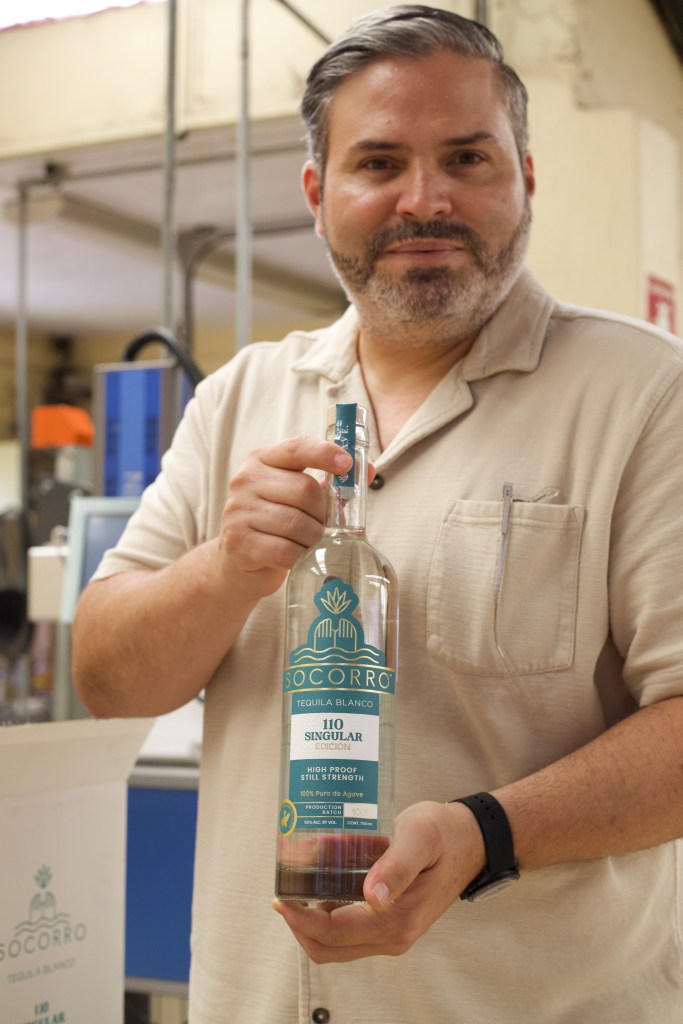
Image credit: Socorro tequila.
Obviously the processes and the raw materials are different, but are there any similarities between wine and tequila?
The biggest connection I see between wine and agave spirits is the soil. It plays a huge role in both. There is also a similar element of patience involved in growing the raw material. With wine, if you start a vineyard from scratch, it can take four to six years before you have grapes of the quality you need. With tequila, you’re also waiting around five or six years for the agave to mature before you can make the juice.
The difference is that with grapes, you harvest the fruit and the same vine can produce more grapes the following year. With agave, you harvest the plant itself, so you have to wait another five or six years for the next crop. That makes it a bigger investment. Growers also rotate their land, often planting corn after harvesting agave to give the soil a break before returning to agave cultivation. So there are similarities between the two worlds, but the way you work with the land and manage that investment is different.
The story of how Socorro became the official tequila of American Airlines is well-established.
I’d like to hear more about what you were feeling moment to moment during that whole process, whether that be dealing with specific challenges or learning new things that helped to improve what you do at Socorro.
I’m still waking up and pinching myself when I think about the American Airlines project. It’s such a large global corporation, and for them to give a small company like ours a chance was incredible. What I particularly appreciated was how transparent and clean the process was. They made it clear that they didn’t care who you were, how influential you were or how much money you had. The decision was based on the presentation, the taste and the price. It’s amazing to see a huge corporation make a decision like that without being overly influenced by marketing power or marketing funds.
I’m a very optimistic person. If you asked me, “Pablo, I’m getting married next week in Manchester, UK. Will you come?”, I’d say, “Heck yeah. I’m going!” I might not even know how I’m going to get there, but I’ll say yes and figure it out afterwards. That’s always been my approach. When I was waiting tables, if someone gave me two tables, I’d take them, but if they gave me five, I’d take those too. Other people might say they’re already busy, whereas I’d say, “Give me more. I’ll take them. Let me figure it out.” My mentality has always been to say yes and then work out how to make it happen.
American Airlines had approached us a few years earlier, but the process was put on hold. We didn’t just forget about it, though. Lindsay Hiller, who is our CSO and is an incredibly organised, type-A person, made sure we followed up every month. We’d keep reminding them that we were there and asking whether they were picking the process back up. When they eventually restarted their request for proposals and asked us to send samples, we got moving immediately.
We’re a small, nimble company, so we went to Amazon, ordered 50ml bottles and tops, printed labels at a local printer, filled the bottles with tequila, sealed them and sent the samples off. We had no idea whether it would lead anywhere, and if you were a betting person, you probably wouldn’t have put your money on us. You’d likely have expected a company such as Diageo to win the business. But we kept going. They came back and asked for more samples, so we repeated the process. Then we progressed to the next round, and eventually we were told we were finalists.
I remember the moment vividly. We were in Colorado for a team retreat when Lindsay picked up her phone, looked at me and said we’d been awarded the tequila contract with American Airlines. Obviously, there was huge excitement. It was one of those moments when you think, “Pinch me. Is this really happening?” But almost immediately, the excitement turned into another question: what were we going to do?
These guys operate thousands of flights, with a huge fleet of aircraft and multiple hubs across the country. We weren’t talking about supplying 10,000 bottles. We had to think about potentially supplying a million bottles, and we had to work out how we were going to do it.
I was responsible for helping figure out the production and bottling side of the project. We knew how to make the tequila, but we needed to find out who could bottle it, where we could source the bottles and who could supply the quantities we needed. The small 50ml bottles required a particular type of aluminium top, whereas many producers of small bottles use plastic screw tops. Finding bottlers with the right equipment and experience was difficult because not everyone knew how to work with that format.
We eventually found two bottling locations. That meant moving tequila from the Highlands to the Lowlands and coordinating everything between the two sites, including the bottles and other dry goods required for production. There were a lot of moving pieces, and it required a tremendous amount of organisation. At the same time, we had to deal with the paperwork involved in expanding our distribution beyond Texas and Colorado. The United States is almost like 50 different countries living under one roof. Every state has different rules, licences and taxes. We had to work through all of that while making sure the project kept moving forward.
My business partner Josh Irving, as CEO, was overseeing everything and making sure we weren’t dropping any balls. Lindsay was also handling a lot of the work involved in getting the project organised and making it possible across different states. We all had our responsibilities, and we had to keep moving.
Eventually, we realised we couldn’t continue depending on other people to bottle the product, so we decided to install our own bottling line at the distillery. That required time, investment and work on both sides, but we got it done. Now we have a line at the distillery dedicated to bottling 50ml bottles all day, every day, hopefully forever.
It was a huge undertaking, but I wouldn’t complain about it. I love Guadalajara, and I had to spend a lot of time there getting things sorted out. There were plenty of challenges, but that’s part of the business. You have to be willing to take on something that looks bigger than you and then find a way to make it work.
Transparency is a hot topic in the tequila industry and it’s something you take seriously at Socorro. This is especially true with one of your latest products in the Blanco 110 Singular.
Tell me about the inspiration for that product and how you approached the idea of transparency with the labelling and data of it.
Brian Ashcraft, Senior Director of Brands at I & A Agave Spirits, brought the idea to us of creating a higher-proof tequila, something around 110 proof. I wanted to go all the way and make it full proof, rather than hold back. We knew the juice was amazing, and we knew that once people tasted it, they would love it.
I’ve tasted it plenty of times straight from the still, and Brian has done the same at our distillery. He’s tasted it and said, “This is delicious. We can’t hide this anymore.” So we started talking about how we could make the product unique and push the boundaries of the information we shared with consumers.
Brian and I worked together on a list of details we wanted to disclose. We wanted to include information about when the agave was harvested, the altitude and details about the raw material itself, right down to how many centimetres of leaf were left on the piña. That leaf is called the penca, and the amount you leave on the piña can affect the flavour of the tequila.
Some producers, such as Patrón, shave the piñas completely, leaving them white with all the pencas removed. We like the additional flavour that the penca can bring when it’s managed properly. The lower part of the leaf, closer to the piña, also contains sugars, and the penca can contribute notes of white pepper and bell pepper. We enjoy those flavours when they’re balanced with everything else in the tequila. For this product, we leave two centimetres of penca on the piña.
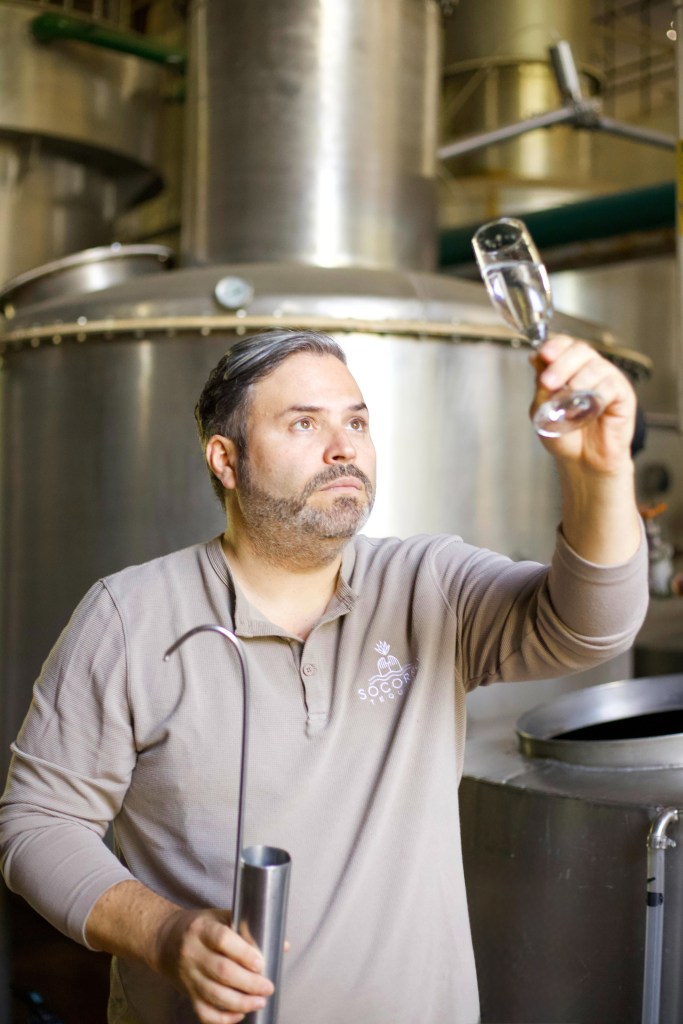
The important thing is that this isn’t simply information we can decide to put on a label because it sounds good. The CRT verifies the information attached to the bottle, so anything we claim has to be supported by evidence. If we say that we’re leaving two centimetres of penca on the piña, they need to verify that the agave is actually being prepared that way.
When you consider the quantities involved, that’s a substantial undertaking. A truckload of agave can contain around 20 tonnes, sometimes more, so we have to record the process and provide pictures and information that demonstrate what we’re doing. The CRT checks the details to make sure that what we say on the label is verifiable. I think that level of control is pretty amazing. I don’t know whether other spirits categories have the same degree of verification for the information they put on their bottles. Champagne, for example, has its own controls, but the level of detail involved here is incredible.
We wanted to include the harvest date, the first and second distillation, and the other information that consumers are increasingly interested in seeing. Other tequila producers, including Siembra, Siempre and Trujillo, have been sharing more of these details, and we wanted to take things further.
I then suggested to Brian that we should include the analytical results the CRT uses to approve the tequila, showing that it falls within the permitted boundaries for things such as higher alcohols, aldehydes and furfural. Brian loves data, so he was immediately on board. We wanted to go as far as we could with transparency and give people more insight into what they were actually drinking.
The product was originally supposed to launch in July 2026, but the amount of information we wanted to include created a lot of work. There were so many details to verify and so much back-and-forth over the label. The CRT was willing to work through the new information with us, but when we submitted the label on the US side, the Alcohol and Tobacco Tax and Trade Bureau had different requirements. We went back and forth with them, and each round of changes took another week or two. Eventually, we didn’t get approval for everything we wanted to include.
I was still saying, “We’re winning, so let’s bottle this thing.” We went ahead and bottled it with the labels, although we had to cover some of the information that couldn’t be included. We wanted to do something different and push the boundaries, and even though we couldn’t get every detail onto the final label, the process itself was worth doing.
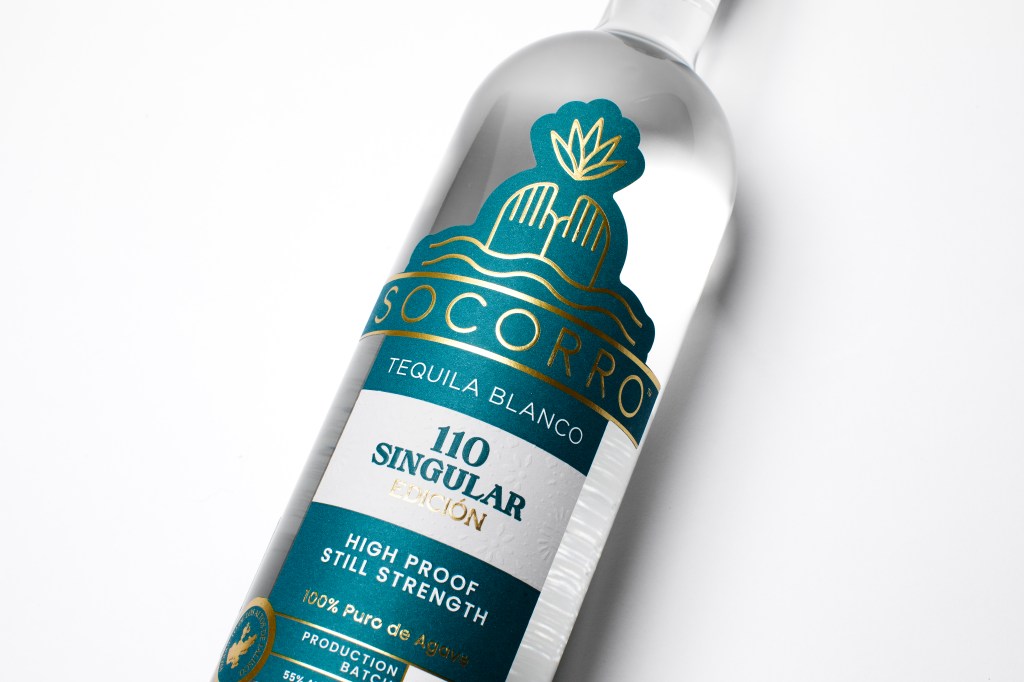
Image credit: Socorro tequila.
What are your opinions around the debate on craft tequila, additive-free tequila and industrial tequila?
I have some opinions on this because we make tequila in what I’d consider the cleanest, traditional way, using the three ingredients and nothing more. That’s a choice we’ve made as a company because we don’t think we need anything else. If you make the tequila properly, you shouldn’t need to add more.
We’re also not a company producing 11 million litres a year, where consistency becomes a huge challenge. We make small batches, and our consistency sits somewhere around 90 to 92%. Because I taste our tequila every day, I can tell the difference between one batch and another. But someone who doesn’t drink it every day might not notice those differences.
I understand why the bigger companies want consistency. Think about Coca-Cola. It would be strange if you drank it today and then came back next week and it tasted different. You expect the same flavour and appearance every time. You don’t want the drink to look dark one day and lighter the next, because that makes you wonder what’s happened.
Large companies are trying to achieve that kind of consistency in flavour, colour and mouthfeel, and additives can be used to help them do it. From a business perspective, I understand why they make those choices. If I have the option, though, I personally wouldn’t choose those products. If I’m in a bar and the only options available are two tequilas that I don’t particularly like, I’ll choose the better one of the two.
From the production side, I think people should also pay attention to diffusers and column stills, not just additives. Those are important parts of the conversation when we’re talking about industrial tequila and how it differs from what people call craft tequila. There’s a lot more to understanding how a tequila is made than simply whether it contains additives.
I do think the additive-free movement is one of the greatest things to happen in terms of bringing information and awareness to consumers. People are paying more attention to what they’re drinking, asking questions and learning about production. That’s a positive thing for the industry.
At the same time, I sometimes find a little hypocrisy in the way people approach it. Someone will come to my table, ask whether our tequila is additive-free and tell me how important that is to them, while they’re drinking a 64-ounce Diet Coke and eating Flamin’ Hot Cheetos. I’ll think, “I understand that you care about additives in tequila, which is only one part of what you’re consuming, but you’re drinking two litres of Coca-Cola and eating something full of additives and colourings.”
You might have someone who is very particular about drinking clean and avoiding certain foods, but they’re drinking nine cans of flavoured sparkling water without thinking about what’s in those products. It makes me wonder whether we’re being consistent about what we care about, or whether we’re applying different standards to different things.
I like hearing about the local agave spirits culture of different regions. I imagine there must be a lot of interest in tequila in Texas.
What’s it like in terms of consumer interest and awareness?
It’s a work in progress, but people are getting more and more interested in the category. You can see it in the sales figures. Brands like ours, which are craft producers, are seeing their numbers go up, while many of the industrial brands are either flat or down. That tells you people are moving from what they used to drink towards brands like Socorro and others competing in that space.
I’ve spent time travelling around Texas over the last couple of months, visiting agave enthusiasts and clubs in different parts of the state. People are crazy about this stuff. They’re really into the information, and we love that. They drink our tequila, they enjoy it, they watch our reels and follow us on Instagram. There’s a movement of people who genuinely care about what they’re drinking, particularly when it comes to tequila, and we’re thankful for that.
It’s becoming more of a cult following, or a fan community, and it’s not just happening in Texas. We’re seeing the same thing in Colorado and across the US. I’d say there’s an agave club in practically every major city in the country. People are coming together because they want to learn about the category, share what they’re drinking and explore different products. That’s exciting for us because those are the people who are interested in what we’re doing and who appreciate the work that goes into making our tequila.
What excites you about the future of tequila in terms of any trends you see coming up in the next 3 – 5 years?
What’s exciting me over the next three years isn’t necessarily a particular tequila trend. First of all, I’m excited for my daughter to start talking. She’s two years old and isn’t talking yet, although she’s making sounds. I’m looking forward to having a conversation with this little person who lives in my house and to whom I pay rent.
I’m also looking forward to the next World Cup. Hopefully, everything stays under control and we can all enjoy a fantastic World Cup. But when it comes to tequila, what excites me is seeing people continue to get into the category, start drinking tequila and other agave spirits, and gradually move towards products like ours.
I want people to start with something accessible, just as they might start eating California rolls when they first get into sushi, and eventually move towards more interesting things as they understand the category better. That’s exciting for us because it means the category continues to grow, and people become more knowledgeable about what they’re drinking.
As a company, we want to keep growing, but we want to do it little by little and with our own means. I don’t want to eat the whole apple in one bite. That’s no fun. I want to savour it. We open up new states gradually, get to know the market and enjoy spending time with the people there. As we grow, I get to be personally involved in that process. I travel to different states and talk to people myself.
Making tequila is very fun, but selling tequila is even better. You’re out there meeting people, having good meals and enjoying what you do. I also want to see that growth happen in the right way. Craft tequila is performing better in terms of growth than the industrial side of the category, and I hope we continue to see that progress. It’s exciting to see people becoming more interested in what they’re drinking and to know that we’re part of that movement.
As a football fan, if you could make Socorro the official tequila of any team in the world, who would it be and why?
This is a tough question because I’m from Argentina, and I’d love to see the Socorro logo on the chest of the Argentina shirt. We’re consistent, we’re one of the best in the world, and we always show up to play. That’s what I expect from my team. That they turn up and give everything they’ve got.
That’s what Argentina does. If they have to lose an arm to keep playing, they’ll lose an arm and carry on. You saw it at the last World Cup. We were under pressure several times, but we kept coming back. We call that a lion mentality.
But leaving Argentina aside, because it’s always going to be in my heart, I’d also love to support an underdog. I was thinking about Cape Verde, the small island nation that did so well in the 2026 World Cup. They were a team of underdogs, with players who were largely amateurs or semi-professionals, and they achieved something incredible for such a small country. They even gave Argentina a very hard time on the way through, and they drew with Spain. That’s something I admire, and it’s the kind of mentality that I’d be proud to associate with Socorro.


Leave a Reply