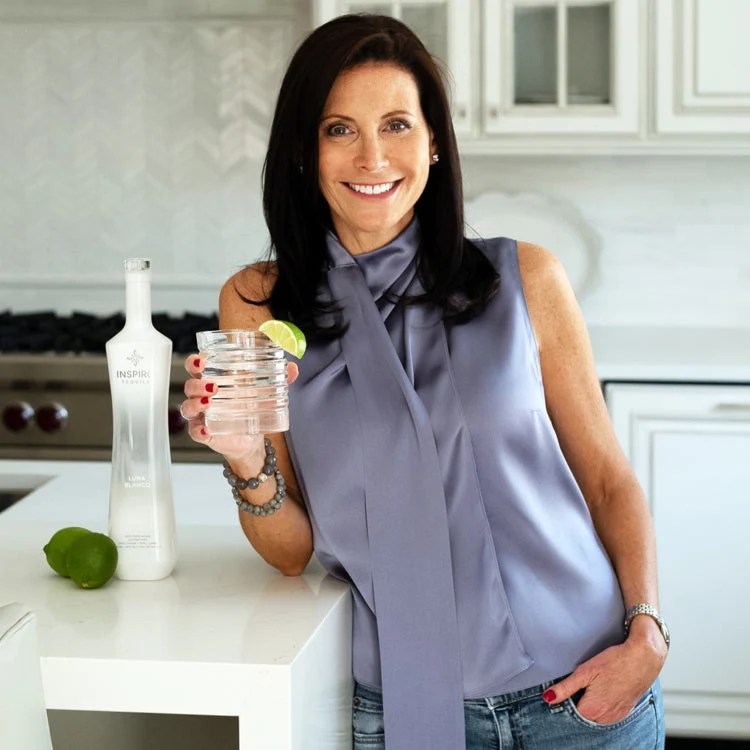
No one path is ever the same into the world of tequila and agave. For the founder of Inspiro Tequila, Mara Smith, her path involved a bold career change from law, the birth of twins and drinking premium tequila that lit a fire under her to create her own brand.
Mara shared her story with The Agaveist on what leading a woman-empowered tequila brand looks like and what the future holds for Inspiro.
You founded Inspiro Tequila in 2020 and the journey has been challenging.
Looking back now, what are one or two lessons you would tell the Mara who was just starting out? What do you know now that you wish you had known at the beginning of the journey?
There are so many things I’ve learned. Six years feels like dog years because there is so much that I learn every day, let alone every year. What I usually tell people who are just getting started and what I would go back and tell myself are two things. One that I was ready for and one that was more surprising.
The first is that starting a brand is a tonne of work. I don’t know how you do this as a little side thing because it is all-consuming all the time. When people ask me if this is part-time, I reply that it’s all the time. I think my career at a large law firm prepared me for the intensity and the hours required. I don’t think I anticipated working more now as a founder than I did at a huge Chicago law firm.
The second lesson is that operations are extremely complicated and there are constantly new obstacles to manage. It isn’t just about producing a product in a foreign country; there are constant operational issues. I thought that once you have a bottle source, selected a distillery, figured out your tequila production process and found distributors, you’re all set and on autopilot. That is the furthest thing from the truth. There are constant logistical and operational challenges
We’re on our second bottle manufacturer and we just changed distilleries. Each of these changes are time consuming and have involved label changes and multiple rounds of approvals. We also changed distributors in a couple of markets. It made me realise that you need to have flexibility and be ready to pivot at any given time.
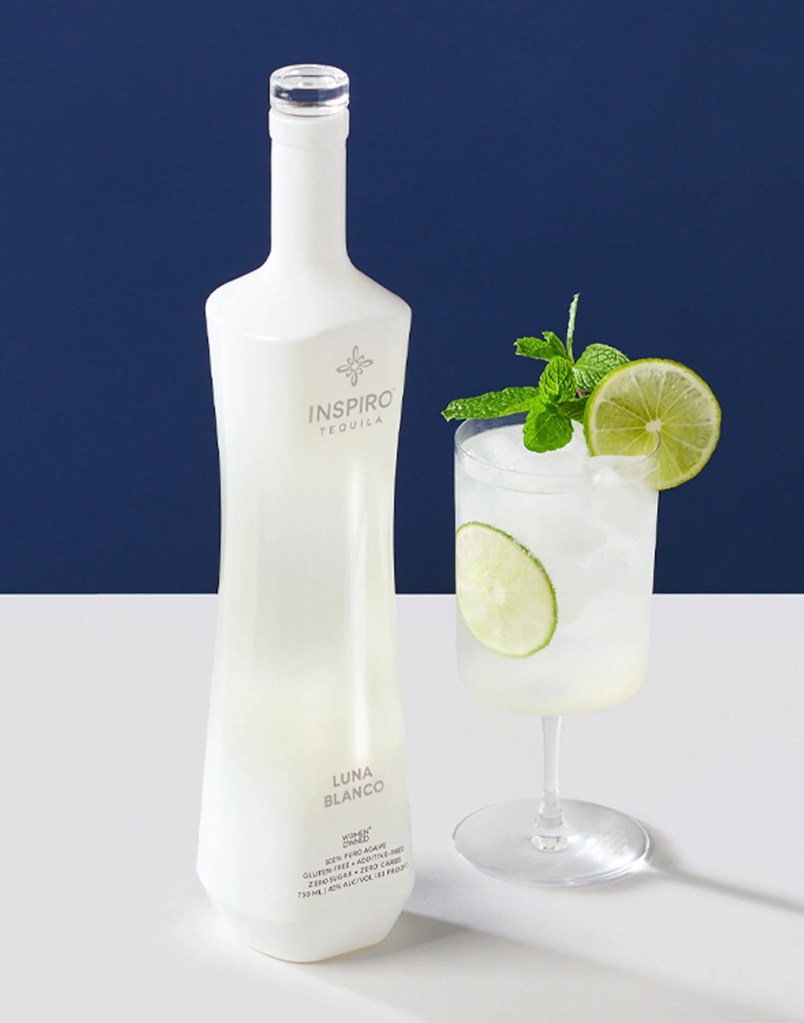
Image credit: Inspiro Tequila.
You mentioned the operational side of the business, and one thing that also stood out to me when researching Inspiro was your B Corp status.
What made you want to go through that process, and was it more intensive than you originally expected?
The first thing I did was become certified woman-owned. I got our WBENC certification right off the bat, before we were even selling product, because that was important to me to have. I thought I would benefit from the services they provide because they offer a lot of educational opportunities and other resources. I also thought it could be helpful with retailers that want to work with diverse-owned brands.
B Corp was different. It was much more complex. You literally have to disclose everything, and the process takes a long time. I found a woman who knew the process and helped me through it. I attained B Corp certification within six months, whereas it usually takes one to two years.
When I’m in, I’m all in, so we moved quickly. I did B Corp because it aligned with the ethos of our company. We were already supporting other female founders and were mission-driven as far as trying to elevate other women in business. We were consciously trying to partner and collaborate with other women-owned businesses and this is the lens we also used when screening vendors and suppliers. I figured we should become B Corp certified because we were already operating consistent with a social impact company.
The funny thing is that you discovered it because you did your research, but we don’t put it out there that much. I haven’t found a real business case behind it. In all honesty. I did it because it aligned with what we were already doing. I reflect on it often because we don’t really put it out on our social media or in our email blasts. We talk about some of our giveback initiatives but we rarely talk specifically about B Corp.
I’m not sure how much consumers understand what B Corp means or how rigorous the certification process is. We happen to be a social-impact company, but you need to qualify across every category – sustainability, governance and every other category have to meet the requirements to become B Corp certified.
Do you think you might ever test that in your marketing more explicitly by saying, “We’re B Corp certified,” and seeing whether consumers respond to it?
I think I would probably be more explicit about what we’re doing. We do two giveback programmes every year. We do one around Women’s History Month to support female founders, and we do one in October, Drink Pink, for Breast Cancer Awareness Month.
I think it’s clearer if we demonstrate exactly what we’re doing and what the initiative is rather than simply saying B Corp. It’s similar to saying our tequila is additive-free. We could say “additive-free,” but a lot of consumers still don’t know what that means or what the additives are.
I think it’s better to be direct and say, “We don’t have sweeteners, including artificial sweeteners. We don’t have glycerin. We don’t have colouring.” Being really clear about what the additives are in tequila gives consumers something they can understand.
Staying with the theme of women in the industry, I’d love to learn more about your relationship with your master distiller, Ana Maria.
Why did you choose her specifically, and how has that relationship developed over time?
It was important to me that we had a female master distiller bring my vision to life. We are powered by an all-women team, and having a legendary female master distiller was important to me because part of the mission behind starting Inspiro was bringing more female perspectives to an industry where there aren’t a lot of female voices.
I read a book about all the women in tequila, and there aren’t that many female master distillers. When I read about Ana Maria, I knew I really wanted her. She was a former sommelier, which I loved, and she had developed the aroma wheel that is used in the industry for tequila. She identified 600 aromas and where they come from in the production process.
Because we are so focused on female consumers, I thought getting the nose right was particularly important. I started all of this during COVID, so I had to find a way to get in touch with Ana Maria without being able to get to Mexico. The country kept getting shut down, so I found consultants in Mexico and asked them to connect me with Ana Maria. We started talking on Zoom, and she is amazing.
She is a scientist because she tests everything so meticulously, but she is also an artist in her craft. I think she was excited to work for a woman-owned brand because she had produced tequila for a lot of different brands but had never worked for one that was run by a woman.
She is our eyes and ears on the ground. She runs every production run because we don’t buy bulk tequila. We run every production ourselves. She has such a detailed process around it, and I’m always learning something every time I’m with her. You just want to absorb everything you can from her.
Moving on to Inspiro itself, could you talk me through the current portfolio, what goes into each of the products and anything else you think is important about the range?
We are really SKU-disciplined, so we don’t have a lot of different SKUs or expressions, and that is purposeful. We have these tall, skinny, pretty bottles that fit easily on a shelf or a bar.
We have our blanco, and I really wanted an approachable, easy-to-drink blanco. I didn’t want it to be very alcohol-forward, even though it doesn’t have additives to make it sweeter. What we decided to do was rest it in bourbon barrels for a short time, which is how we developed some sweeter notes. It has caramel and vanilla, but we achieved those flavours without using additives by putting the tequila in the wood.
Very few blancos go into wood, but blancos can go into wood for up to 59 days. Ours has more vanilla and caramel, with hints of citrus, but it doesn’t have a lot of bite. That is because it reflects my taste preference. I don’t love a lot of bite, and I think a lot of female consumers don’t either. You still have the agave-forward character, but it is more like cooked agave rather than raw agave.
Then we have our Rosa Reposado, which is the only reposado we have. It’s the first tequila aged in rosé wine barrels.I had this idea of ageing tequila in rosé wine barrels because I like rosé wine and I like tequila. Little did I know that rosé wine is a young wine that rarely goes into wood, so it was next to impossible to find rosé wine barrels.
I scoured the planet to find them, and we eventually found them in the south of France. They take Pinot Noir barrels, make rosé wine in them once, and then we buy those barrels from them once a year. The barrels have to travel from France to California and then from California to Mexico, so it takes a very long time.
The barrels lend the tequila a natural rose-gold hue, which is really unique. It is a light reposado, aged for two to three months, and I would describe it as having more berry and floral notes than heavy wood.
We also had a special-release añejo, but we aren’t making any more of it. Right now, nothing is being aged for another añejo. It was a special-reserve añejo, and we only had four barrels produced.
There is an interesting story behind why we made it because I had no intention of making añejo. I’m not particularly an añejo drinker, and I really wanted to master the SKUs we already have rather than constantly coming up with another SKU. I want people to enjoy Inspiro all the time rather than wait to collect our bottles.
What happened was that we used to double wine-barrel-age our reposado. It went into rosé wine barrels and was then finished in Pinot Noir barrels. It was very difficult to keep the colour and taste profile consistent with aging in two different barrel types.
I decided we should make the reposado exclusively in rosé wine barrels because I liked it lighter. We had four Pinot Noir barrels that were still full, so I said, “Just leave them there and let’s see what happens in a year.” We kind of forgot about them.
We went down to Mexico for another tasting and they asked if I wanted to try what was in the Pinot Noir barrels. It had been sitting there for well over a year, and when we tasted it directly from the barrel at cask strength, which was 44 ABV, everyone thought it was amazing.
We decided not to add any water and bottled it at cask strength. It was double wine-barrel-aged, going into rosé wine barrels for four months and then Pinot Noir barrels for 15 and a half months.
We only had those four barrels, and we didn’t even have bottles prepared for it, so the bottles have different handwritten labels. That is all we have. There is no more aging, so it is a very limited release. It is incredible and delicious. I have a stockpile at my house that I ration because that is all we have.
I always find that some of the best drinks come out of those unexpected experiments where you discover something that works and then decide to run with it.
Looking more broadly at the market, what are you seeing in Chicago and Illinois when it comes to agave spirits? Is there already a strong interest in tequila, or is there still a lot of education needed around what premium and genuinely good tequila actually means?
It is interesting because I fall on two sides of this. Tequila is very popular here, since I’m in a big city and you’re likely to find where there are big food and cocktails scenes, tequila is popular. You see lots of tequila options and cocktail options on menus pretty much everywhere.
Illinois is a big tequila market. I think it is number four in the entire US, with California being the largest. When it comes to education around additives, I find it a little mixed here.
Once you are in bars and restaurants, most bartenders and beverage directors are up to speed. They know about additives and are trying to convert people into drinking additive-free tequila.
There are groups of consumers who understand it, but I don’t think we are as early adopters as the California market. California is extremely knowledgeable about additives, and you can see that they are already much further into the additive-free movement.
Here, I would say it is a mixed bag. You still have people ordering the big celebrity-brand tequilas that they believe are good-quality tequilas. People are still calling for those brands, so restaurants and bars need to carry them. I think we are getting there, but we probably aren’t as far ahead as California.
I’m always interested in the regulatory side of tequila. What are your thoughts on the current regulations?
Do you think the protections are important but perhaps go too far in some areas, or do you think there is a reasonable balance between regulation and protecting the category?
Navigating all the regulations is very difficult and time-consuming from every aspect. I’m dealing with regulatory agencies in Mexico, and that is one whole level of complexity. The reason I have had to keep changing our bottle labels is because they keep telling us that one more thing has to be removed from the label.
We started out being allowed to say we had confirmed additive-free status from Tequila Matchmaker. Then we were told we could only say “additive-free”, so we changed it to that. Then they told us we couldn’t say “additive-free”. We said “zero sugar”, and they told us we couldn’t say that because it implies additive-free and had to be removed.
I can’t believe how many times I have had to change bottles as a small producer. We even received questions about things such as needing to clarify what “woman-owned” means. We get questions about everything.
We also moved to a new distillery, and the amount of effort and work involved in transferring over is significant. Then the US is another level of complexity. I am governed federally by a three-tier distribution system, and every single state operates almost like its own country here. So, there are a huge number of regulatory hurdles that you have to navigate constantly.
I’m a former lawyer, so I think I have been able to navigate those requirements a little more easily, but it is still a major undertaking. As far as where I stand on the regulations, I’m sure there are things that are necessary and helpful. On the other hand, we have probably evolved slightly since 1933, post-Prohibition, and there are some things we could adapt a little to modern times in terms of the regulations that are currently in place.
Whether in agave spirits or other categories, are there any women-owned brands or female founders that you particularly admire, either because of their journeys or because of what they are doing within a particular category?
There are too many female founders for me to name. I’m very fortunate because I have a very large female-founder community.
Within spirits, I have a group of female founders who are spirits brand owners, and we have our own cohort where we share learnings and support each other. There is Jamie Hunt, who has Americano Amaro, and Effie, who owns a mastiha brand. Paige owns Happenstance Bourbon, and there are a number of us across different spirits categories. I have mezcal founders in the group as well.
I honestly emulate all of them. They all work incredibly hard trying to build their companies. In general, every woman-owned spirits brand I know is underfunded while the founders are doing almost everything themselves, which is remarkable.
I also have a wider community in the CPG space, including food and beverage founders, and I look to that group a lot because I like seeing how people are doing things differently. Everyone in spirits who has been in the industry for a long time tends to do things in the same way over and over again, so I like looking at the wider consumer space to see how people are approaching things and building their businesses.
That includes female founders in beverages and food. I know women building everything from children’s breakfast-food brands to candy and granola companies. I have this huge network of female founders, and those are the people I learn the most from.
I’m always going to gravitate towards peer-to-peer mentoring and learning from other founders who are in the thick of it rather than consultants.
Looking ahead at trends, whether that is flavoured tequila or something else, what do you think will become more prevalent in the tequila market over the next three to five years?
It probably depends on the consumer and what kind of consumer you are looking at. If you look at younger drinkers who are drinking more flavoured drinks, perhaps that will be the trend.
When I look at my consumer, who is a woman over 35, I still think there is a strong place for an ultra-premium, clean tequila paired with a really simple, easy cocktail that tastes good. That is where I think the market is going.
It was also important to me not to dumb down the product because I’m focused on a thoughtful female consumer. I didn’t want to dumb it down by making it a fruity flavor or putting it in a hot-pink bottle. I think she enjoys good-quality tequila.
She doesn’t need to be an aficionado, know everything about tequila, or follow a certain protocol around how to sip it in the proper glassware. If she wants to have it in a cocktail, that is great.
More generally, I think there is a trend towards drinking less but better. If you are going to be more discerning, quality becomes more important. Going out for cocktails is really expensive here, so if you are going to have fewer drinks, you are more likely to want them to be better-quality products.
I also think there is a big trend towards health, wellness and transparency. People want to know what is in their beauty products, their cleaning products and the food they are eating. We are just starting to get to the point where people also want to know what is in what they are drinking.
In my opinion that means wanting something that is a cleaner option while still allowing yourself to enjoy the experience. That is my perspective, so it may not represent the whole market. If I want to enjoy myself and have a drink, I don’t want it laden with sugar or a tonne of calories. I want to enjoy the drink without feeling like I’m going to regret it afterwards.
What excites you about the future of Inspiro? Are there any new products, initiatives or developments that you can share?
There are always so many things we are getting ready for. We have two new sizes coming out, a 375ml and a 50ml, which are exact replicas of our existing bottle. I’m particularly excited about the smaller formats, especially the little minis, because people have been asking us about them for a long time for gift bags, bachelor parties, weddings and all kinds of events. Having those available is something I’m really looking forward to.
As we move into autumn and the end of the year, there are two other things I’m always excited about. One is our Drink Pink campaign supporting breast cancer awareness. I love seeing accounts and people come up with great pink cocktails around the campaign and being able to combine that with giving back.
The second is that we are looking to launch a more substantial corporate gifting programme. We talk about B Corp and being woman-owned, and there are a lot of corporations where we align with some of their goals and what they are trying to do.
Being able to gift something a little different from a small, woman-owned, B Corp-certified company could be a really good opportunity for us. It isn’t simply about them buying or gifting our product; it gives more people the opportunity to hear about the brand in a really organic way.
It is also different from us sending influencer boxes. These are people who have been gifted a product that they can try and learn about, which gives them a genuine introduction to the brand.
The journey continues to offer learnings, surprises and obstacles and I’m ready for them.


Leave a comment