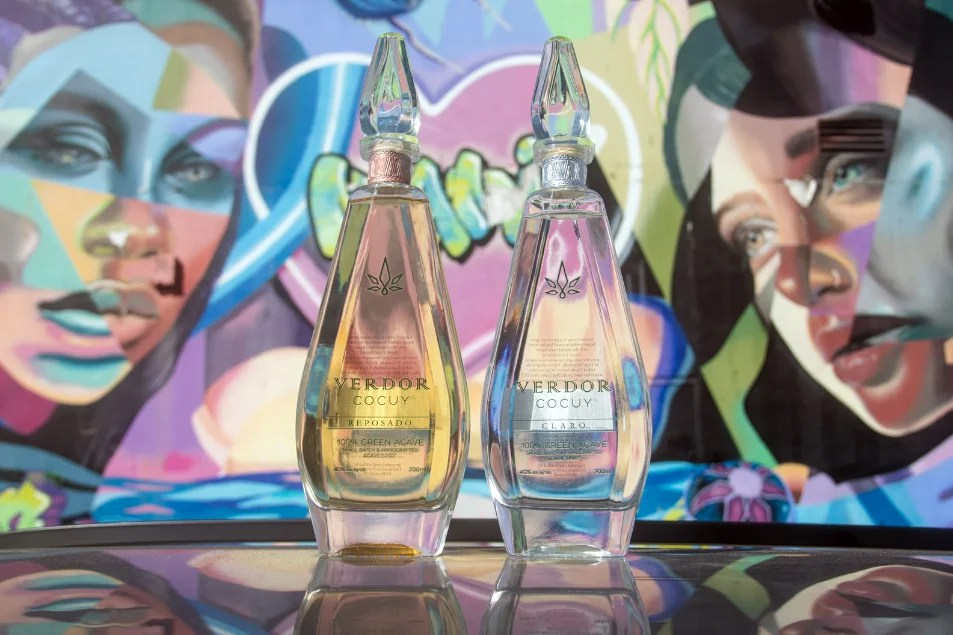
There is a growing trend of agave spirits being made outside of Mexico and following in the footsteps of tequila and mezcal. After all, the agave is an adaptable plant and it’s interesting to see the kind of drinks and flavours that are coming out of different countries.
Cocuy from South America is a part of that list. The Agaveist spoke with Otto Lauterbach, founder of Cocuy Ambassadors to find out more about this unique spirit, how it differs from tequila and mezcal and what the future holds for cocuy in the West.
For people who don’t know what cocuy is, what is it and what is the general history behind it?
In South America, we have been fermenting cocuy since the 1600s, or even before that, so it has been part of our culture for a long time. It was only when the Spanish came to conquer the Americas and South America that they brought alembics with them. Slowly, from that point onward, people began distilling cocuy. We have records dating back to the 1600s, but more official records came later. Precisely, the company Verdor that I represent through Cocuy Ambassadors had the first legal licence to produce cocuy nearly 100 years ago. In 2027 it will officially be 100 years since that licence was granted, so they are holders of the first licence.
In terms of how things evolved, cocuy was doing well nationwide as an industry, but during the 1940s there was a dictator in Venezuela who had a strong interest in making the rum industry more successful. Because of this, he imposed many restrictions on cocuy production and effectively made it illegal. For around sixty years, up until 2002, there was a great deal of clandestine cocuy production. Many people who refused to stop making it went into the mountains of an area called Municipio Urdaneta, which is where around eighty per cent of Venezuela’s cocuy is still made today.
The producers hid there with small pots of fermented juice, and the alembics they used were improvised steel barrels rather than stainless steel equipment. Everything was extremely precarious and mobile so they could move the stills quickly if they were discovered by the authorities.
This continued for roughly sixty-two years. People still produced cocuy illegally and in poor conditions, but they kept the tradition alive. Then in 2002, President Hugo Chávez came to power and made cocuy not only legal, but declared it a national patrimony and gave it a denomination of origin.
Since then, we’ve slowly been turning it into a real industry, although there is still a great deal of work to do. There are many laws, protections, and regulations that still need to be put in place to ensure efficiency, sustainability, and longevity for the future of cocuy production.
Cocuy itself is an agave spirit. The plant is called cocui trelease with an i while the drink is spelled with a y just to make things more confusing. The agave takes between eight and ten years to mature before it can be harvested. The production process is similar to mezcal. First we bake the agaves in underground concave ovens. Stones are heated with branches from a local tree called cují. Once the rocks are sufficiently hot, the ashes are cleared as much as possible to reduce excessive smoke. Then the piñas are placed into the pit and covered with cloths and gravel to create a natural underground oven.
The agaves remain there for around five days. Ideally, we want the piñas to cool naturally inside the earth rather than being removed while still warm. The entire process is slow and respectful. Once baked, the agaves are fermented and then distilled. That is essentially the process in simple terms.
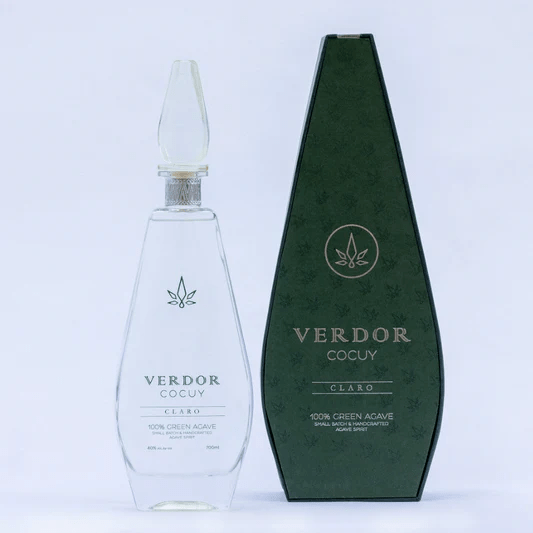
That’s fascinating. One thing I noticed when tasting Verdor was an earthy and herbal profile. I wondered if that was one of the major distinctions between cocuy and spirits like tequila or mezcal.
Are there other differences in the agave itself that shape the flavour profile?
The biggest distinction is that our agaves are completely wild. With tequila, for example, it’s difficult to find wild blue agave now. Even with mezcal, although there are still artisans using wild agaves, most production is farmed. Cocuy, however, still relies entirely on wild agaves. These agaves grow in the semi-arid regions of Venezuela where it only rains for perhaps three weeks of the year.
During those rainy periods you cannot harvest because the sugar concentration is too low. The rest of the year the agaves survive in extreme conditions with daytime temperatures reaching thirty-five to forty degrees Celsius and nighttime temperatures dropping to twelve or fourteen degrees. That dramatic change in temperature is essential because it creates very resilient agaves with high sugar concentration.
The agaves also grow surrounded by eucalyptus, wild oregano, and native trees such as cují and caujaro, which all contribute flavour. On top of that, there is the tropical climate and strong minerality from the soil because the plants are never watered artificially. Water exists underground in dry riverbeds beneath the mountains and hills where the agaves grow, so the plants pull water and minerals naturally from deep underground. That minerality becomes one of the spirit’s defining characteristics.
In the case of Verdor specifically, there are currently three major tendencies in cocuy production. The first is the traditional style. During distillation you separate the head, body, and tail. Traditionally, the best alcohol comes from the middle section between fifty and sixty per cent ABV. This produces the cleanest spirit with fewer hangovers and more volatile aromas such as floral, fruity, and mineral notes. The tail contains heavier oily, leathery, and earthy characteristics. Traditionally, producers would use a small amount of the tail to lower the alcohol to around forty percent.
Verdor decided not to follow that method. Instead, they preserve the volatile floral and fruity characteristics by adding water after distillation rather than blending in the tail. The spirit comes off the still at fifty-five or sixty degrees and is then diluted with water down to forty per cent. Similar to adding a little water to whisky or bourbon, this opens up the flavours while preserving the spirit’s natural profile. That philosophy defines Verdor’s style.
The third tendency emerging now is blending, or what in Mexico is called ensamble. This involves multiple producers combining different cocuy distillates together. A company called Maestro Ayaman is pioneering this approach in Venezuela right now and has become extremely successful. At Cocuy Ambassadors, we hope to bring them to Europe very soon.

Let’s focus more on your own background. How did you personally become involved in the industry, and what made you want to become a promoter and ambassador for cocuy?
I’ve always loved tequila and mezcal. I lived in England for thirty years working in hospitality, building restaurants and bars, and I witnessed the incredible rise of agave spirits globally. Around eight years ago I visited Venezuela after spending many years away from the country, and somebody offered me cocuy. I was completely blown away by it.
I returned to England trying to find the right people to work with, but at that stage the industry still wasn’t ready to export. Then, about three and a half years ago, I moved back to Venezuela permanently for family reasons. That gave me the opportunity to truly immerse myself in the industry and investigate it deeply. Through that process I discovered Verdor. There were other companies as well, but Verdor stood out immediately as professional, serious, and export-ready. I knew they were the right people to work with.
Together with my partners Andrea Mottadetti, an Italian who also loves agave spirits, and John Paul Fraser, a Venezuelan-Canadian based in London, we founded Cocuy Ambassadors. They manage operations in the UK, handling logistics, opportunities, and relationships, while I remain in Venezuela sourcing producers, investing in the industry, buying land, and helping develop cocuy at the source.
What truly keeps me committed, though, are the people. These producers are like a clan or a tribe. They don’t make cocuy purely for business. They make it because they were born into it. You see nine-year-old children going into the mountains alongside their eighty-year-old grandmothers, completely involved in the process from an early age.
The tradition passes from generation to generation through pure passion and love. These people live and breathe cocuy. They are among the most generous and humble people I have ever met. It is an extraordinary industry to be part of.
One thing JP mentioned when I spoke to him was that in the US, Florida is currently the only place where cocuy is really available due to logistical challenges.
Have you noticed any major differences between the UK market and the US market in terms of acceptance or importing the spirit?
The UK market has definitely been more receptive and easier to work with. The US is much more complicated because every state has its own laws and regulations. You have to adapt to different requirements constantly. Choosing a distributor is also extremely important because distributors are often limited to operating within a single state and cannot easily distribute nationwide. It becomes incredibly complex.
In comparison, the UK has been easier than much of mainland Europe. Exporting into Britain is more straightforward. Countries like France or Spain involve far more testing, bureaucracy, and paperwork. The UK has been far more welcoming from a logistical perspective.
I wondered whether cocuy shares similarities with Venezuelan rum, like Diplomatico, when explaining it to people. Do you find that comparison useful, or do you see cocuy as completely separate?
Completely separate. I wouldn’t compare it closely to rum at all. The only similarity comes from ageing practices because, until recently, many reposados in Venezuela were aged in old rum barrels. These barrels, often American or Canadian oak, had already been used extensively in the rum industry and no longer contributed much flavour to rum, so they were sold cheaply to cocuy producers.
As a result, some aged cocuys developed slight molasses or sugarcane notes. But fundamentally, agave itself makes cocuy entirely different from rum or whisky. Whisky grains and sugarcane can be harvested and processed very quickly, whereas agave requires many years to mature. The entire agricultural cycle and production process are much slower and more demanding. Agave spirits occupy a completely different category.
Regarding the denomination of origin and legal protections, what regulations currently define authentic cocuy?
The most important rule is that it must be made from one hundred per cent agave. Beyond that, many regulations are still being developed. In complete honesty, the industry is still in a very early stage of formalisation. We are working hard to create better protections, particularly for artisans and the land itself.
Unfortunately, there are already entrepreneurs trying to exploit poor producers. These artisans often live in poverty, so if somebody offers them decent money they may sell large quantities of cocuy or even agave plants without long-term protections. Because of that, we are trying to establish stronger legislation, although much of that work is still confidential at this stage.
In many ways, it’s almost a miracle that Verdor exists internationally already. At the same time, there are positive developments. Companies like Saroche are cultivating cocuy more sustainably, and many people we work with are investing in farming and conservation initiatives.
Could you give me a brief history of the family behind Verdor?
Cristóbal Sánchez, Verdor’s Maestro Cocuyero, is third generation. Because cocuy production faced so many restrictions historically, one member of his family was even imprisoned for three months simply for producing cocuy. Their roots in the tradition run incredibly deep. The family has been making cocuy for around two hundred years.
Cristóbal Sánchez is also one of the most important figures in the modern cocuy industry in Venezuela. He is deeply involved in protecting the category and pushing for stronger legal frameworks and regulations to safeguard its future.
It’s always inspiring hearing about the people fighting to protect these traditions.
The challenge is that Venezuela’s political situation remains very unstable. You might spend months building relationships with a particular minister, only to discover later that the entire administration has changed. Achieving anything in Venezuela is extremely difficult. That’s what I meant when I said it’s a miracle Verdor has a presence in UK.
A trend I’ve noticed globally is that more countries are producing agave distillates outside of Mexico. We now see projects in India, Italy, South Africa, Venezuela, and elsewhere. What are your thoughts on that wider movement?
I think it’s fantastic. I know producers in India and South Africa, and there are also projects in Italy. Colombia may soon release an agave distillate, and Bolivia also has agave resources. The more this category grows globally, the better it will be for everyone.
At the moment, being one of the only recognised agave spirits outside of Mexico makes promotion difficult. But if more countries begin producing high-quality agave distillates, consumers will become more open and curious about the broader category. That increased awareness will help all of us. I truly believe the movement will continue to grow.
Looking specifically at the UK market and Verdor, cocktails are often one of the best ways to introduce people to new spirits.
Are there particular cocktails or activations you’ve been focusing on?
We strongly believe that Verdor is fundamentally a sipping spirit. The quality, flavour profile, and limited production all point toward enjoying it neat rather than masking it in cocktails. That said, cocktails are obviously important for introducing consumers to the category.
We’ve collaborated on several initiatives already. The Soho Hotel created a Negroni using Verdor Reposado that they rested in a barrel inside the hotel for six months. It was an incredible success. They sold sixty litres within a month at a very premium price point.
Bars in East London, such as Highwater, are also using cocuy in margaritas. Naturally, cocktails like margaritas and palomas are familiar entry points because consumers already associate them with agave spirits.
However, personally I think the best way to experience Verdor is almost like an Old Fashioned, with a little Angostura bitters and a large cube of ice. That slight dilution opens up the floral and fruity notes beautifully.
What excites you most about the future of cocuy?
We’ve already won medals and recognition in competitions all around the world, including Mexico, Belgium, America, and China. That international recognition is extremely exciting for us.
What excites me even more is that Cocuy Ambassadors is currently working with four additional producers that we hope will be export-ready by the end of this year or the beginning of next year. These are very serious producers with incredible products. One of them will hopefully be my own brand, Cocuy Embajador.
Most importantly, there is now genuine attention being paid to the industry by people who want to protect it rather than simply exploit it. Everything suggests that cocuy is finally going to establish itself internationally. Production volumes will always remain relatively small compared to tequila giants producing hundreds of thousands of litres, but that also means cocuy can preserve its identity as a high-quality artisanal spirit.
If you could change one or two things about the cocuy industry right now, what would they be?
That’s an interesting question because I approach the industry with a great deal of humility. These families have been making cocuy for generations with enormous passion and dedication, so as an outsider I want to remain respectful and receptive to their traditions and methods.
Honestly, the only thing I would truly change is the level of government support. If we had stronger institutional backing, easier export agreements, and more international support, then the possibilities would be enormous. Beyond that, I wouldn’t change anything. It’s a wonderful industry filled with extraordinary people.


Leave a comment